Sustainability in flexographic printing starts with optimization. A process that not only produces consistent quality and uses materials efficiently, but is manageable for the people running it. It is a process that produces less waste, is better for the environment, and places less stress on your staff. That’s a win for both your long-term profits and the environment.
While environmental impact is a key component of sustainability, it’s important to also consider your processes and your staff. Repeated plate remakes, missing supplies, damaged equipment, and difficult washups don’t just consume materials. They interrupt schedules, add stress, increase turnover, and leave operators solving the same problems shift after shift.
The opportunity with sustainability is to make everyday work more repeatable: know which plates are ready, keep supplies consistent and available, choose materials that fit the application and protect what you can use again. Done well, those improvements support your environmental goals, your margins and your team.
Overall Process Improvements: Make Repeatability the Starting Point
A rerun doesn’t just lose time, it wastes substrate, ink and cleaning chemicals. That’s both lost profit and environmental impact. Reducing recurring problems keeps more of those resources in productive work.
Like all good data-based decisions, this has to start with tracking issues. Why was a plate remade, how long did the makeready take, what were the reasons that a job had to be rerun again? Connect the reason to the job and plate, then look for patterns. Was the plate damaged during removal? During storage? Did colors drift during the run, and what was the fix? Did the same issue occur on another shift?
A useful record tells your team what happened, what was consumed and what needs attention. Do you need a different mounting tape? More training? While you probably have some version of your own tracking system, investing in an automated tool tracking software like the Grey Elephant can take some of the heavy lifting off your plate.
Use The Grey Elephant to Connect Plates With Production History
The Grey Elephant’s Track&Trace4Tools identifies, tracks and archives printing tools, including flexographic plates. Its tool records give production teams a way to connect the physical plate with information about its use.
Combined with consistent run and remake records, that visibility helps your team investigate repeat problems and determine whether an existing plate is available for another job. It also makes plate knowledge easier to share shift after shift, instead of leaving it with the person who remembers the last run.
Tracking is most useful when the records lead to action: inspect a suspect plate, correct a handling problem or make the next set easier to retrieve.
Keep Consumables Available With A&V RFID Racks
Plate history answers one question. Knowing whether the mounting tape or other consumable is on hand answers another. Not having the supplies you need on hand adds can lead to more expensive rush orders, trucks on the road, time spent hunting for supplies, and sometimes even having to use an unfamiliar substitute that may cause issues, stress, and waste.
A&V’s Intelligent Vendor Managed Inventory system, AVMI, uses RFID-enabled shelving racks or cabinets to monitor tagged supplies, support inventory reporting and streamline replenishment. Ordering workflows can be configured around the operation’s needs, including purchase orders for approval.
Organized storage and clear inventory levels will help staff spend less time counting and searching so they can focus on production. Plus, the reduced number of freight shipments and freight costs will help you reduce your carbon footprint!
Platemaking: Improve Sustainability Without Giving Up Quality
The right plate should meet the print requirement and fit the way your shop works. Sustainability doesn’t need to mean a slower process or lower quality – in fact it shouldn’t. Something’s only truly sustainable long-term when it’s a practical choice that maintains quality.
The Innovation of Liquid Photopolymers
Liquid photopolymer resins offer a solvent-free approach to platemaking and helps make better use of materials. Anderson & Vreeland manufactures their own line of AVantage® Liquid Photopolymer Resins right in their Bryan, Ohio laboratory. These resins are designed for various printing applications, such as corrugated, molding, stamp, sand or bronze casting, and multi-wall bag/paper sacks.
When imaging one entire color in register as opposed to preparing individual copy pieces and mounting them, as much as 70% of the original cast polymer can be reclaimed. With the ability to reclaim uncured polymer, AVantage® printing resins help reduce material waste while producing lightweight plates designed to deliver high-quality print results. Lightweight plates require less storage space, and are especially beneficial for tradeshops since they can reduce shipping costs.
Consider Water-Wash Plates
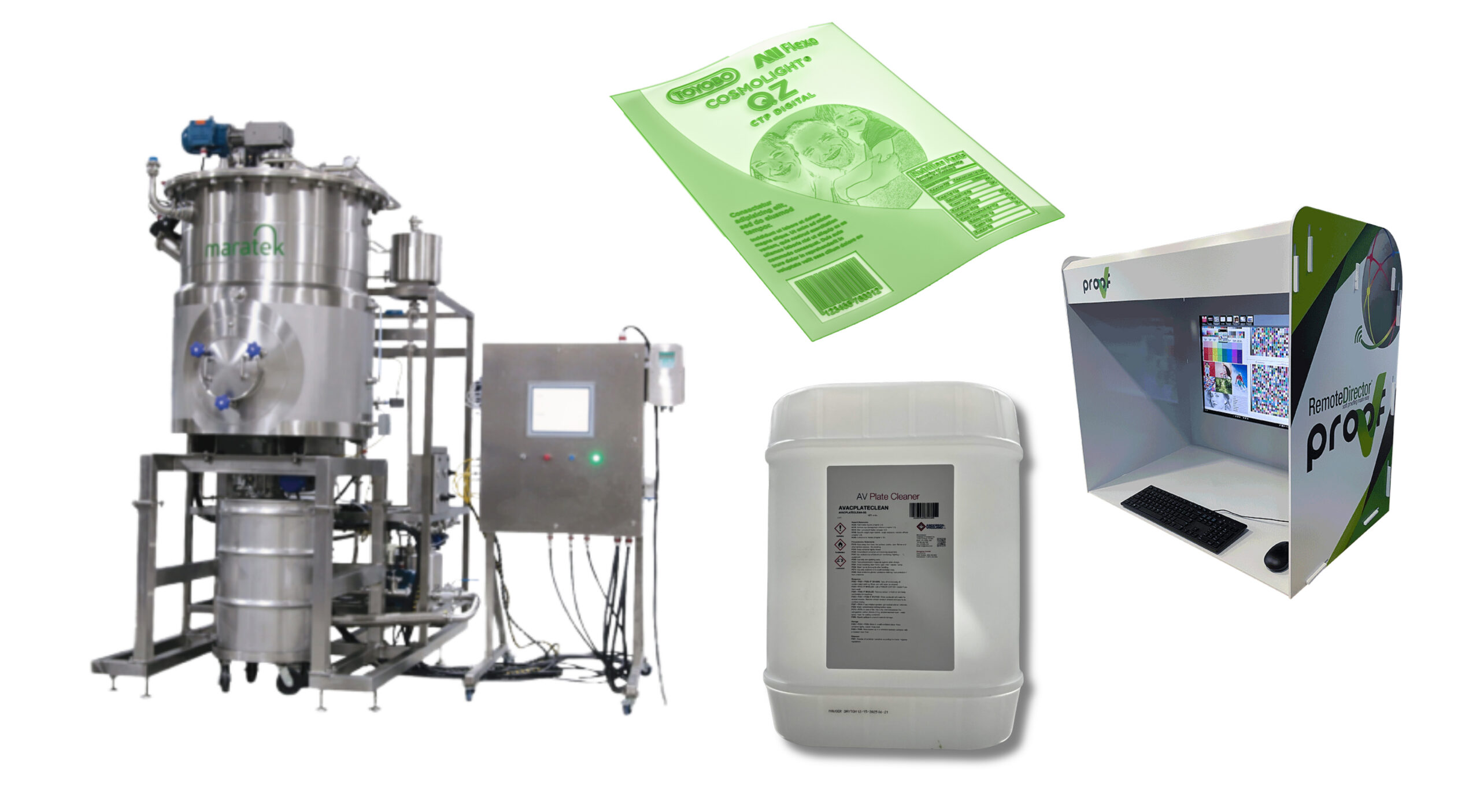
Water-washable plates such as Toyobo Cosmolight use a water-based washout process instead of solvents, reducing the environmental impact while maintaining high-resolution plates. That changes the processing requirements while retaining a plate technology designed for demanding flexographic work.
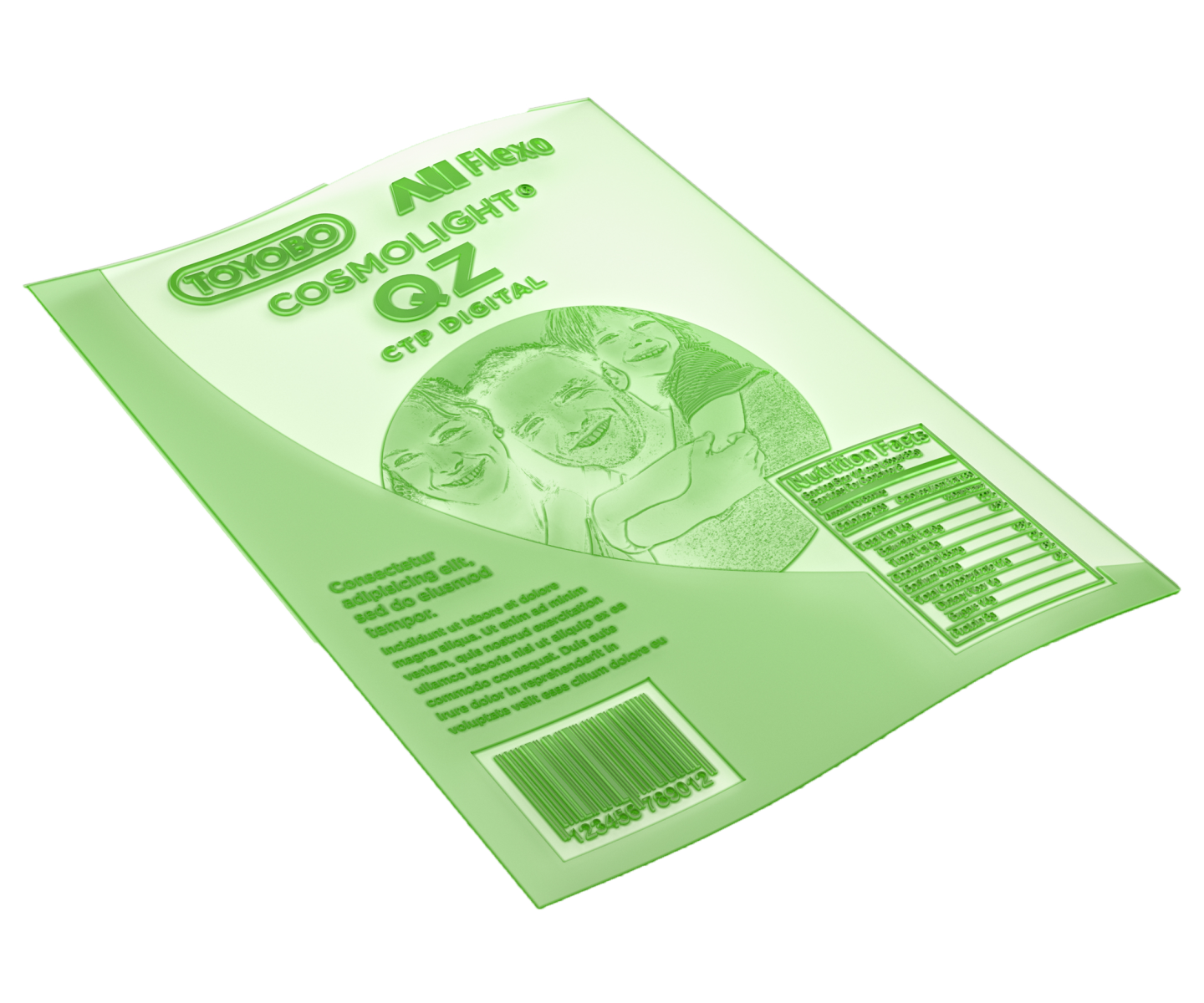
Compared with solvent or thermally processed planets, waterwash plates have a smaller footprint, easier process, and reduced environmental impact. Jones Packaging switched to waterwash from DuPont’s Cyrel plates to improve their quality and meet the demands of the pharma sector. The optimization was around quality and process – the reduced environmental impact is a bonus.
Evaluate nyloflex eco ACT
XSYS nyloflex® eco ACT provides another material option for water-based inks in the corrugated pre-print, mtuli-wall bag, folding carton, paper wrapper and gift wrapping on paper-based substrates. The plate incorporates renewable raw materials while maintaining the print characteristics expected from the ACT family, and is optimized for use in LED processing equipment. It requires solvent processing for best results.
For a shop already using that processing route, the conversation is about a suitable plate formulation and efficient processing. Match the specific plate variant to the application and confirm the processing requirements with A&V’s dedicated polymer team.
Recover and Reuse Platemaking Solvents
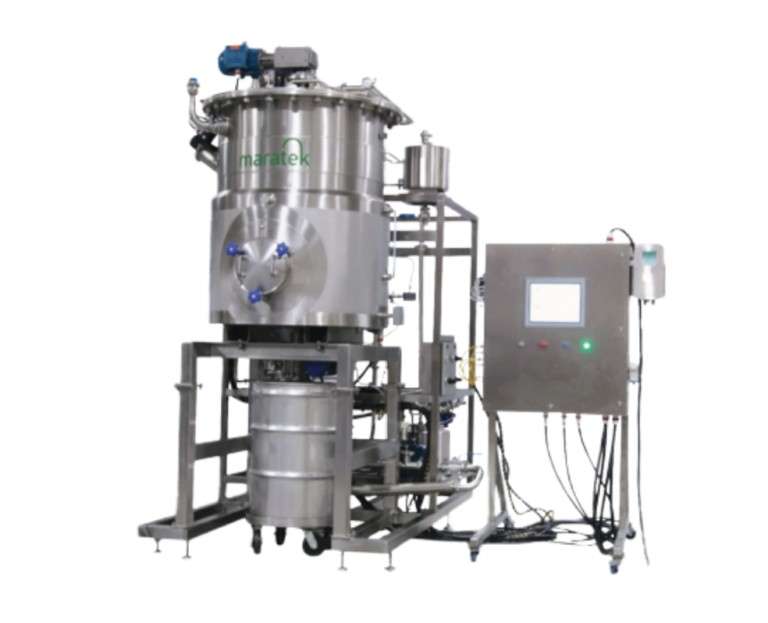
Solvent-based platemaking also offers opportunities to use resources more effectively. Maratek’s Flexo 500 uses distillation to separate reusable solvent from a compatible waste stream. A&V offers on-site equipment and external solvent recycling, giving shops different ways to approach recovery.
The potential benefit is straightforward: reuse recovered solvent rather than purchasing an equivalent quantity of new material and disposing of it after one use. The right arrangement depends on solvent type, waste volume, recovered-solvent quality and operating costs. A&V can help assess whether on-site recycling or an external recycling-and-return service fits the operation. Keep the recovery process connected to the platemaking workflow so collection and handling are consistent.
Digital Soft Proofing: Move Suitable Approvals Online
When a proof needs another revision, mailing another printed sample adds materials and waiting time. For jobs that don’t require evaluation on physical proofing media, digital proofing can simplify that approval cycle.
ICScolor ProofCheck brings a high-end monitor, computer, controlled LED lighting and a display-measurement device together in a digital viewing station. Remote Director supports shared review and approval, with calibration and verification tools for color review across participating displays.
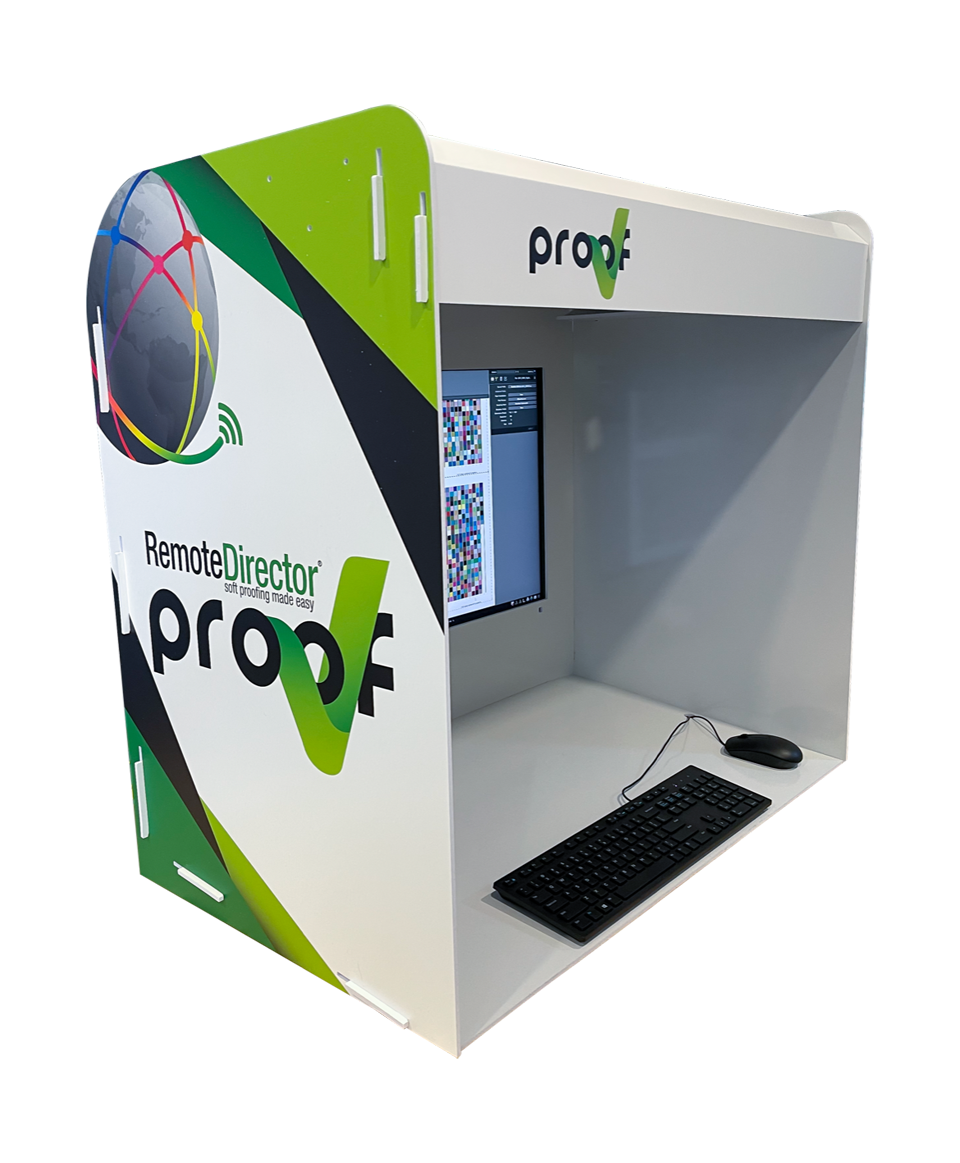
Instead of printing, packaging and shipping each suitable revision, reviewers can work from the digital proof. That can shorten the revision cycle while avoiding the paper, packaging and transport associated with those physical proof rounds.
The fit matters. Keep a physical proof where the customer needs to evaluate the proofing substrate, finish or another characteristic that requires a physical sample. For on-screen color decisions, establish the required calibrated viewing conditions and a clear sign-off process.
This is sustainability through optimization: use the approval method that gives the customer what they need with fewer unnecessary steps.
Plate Storage and Handling: Protect What You Can Use Again
A plate that prints well today should have a practical path back to the press for repeat work. That starts during removal and continues through cleaning, storage and retrieval.
Choose Mounting Tape With Removal in Mind
Secure mounting matters on press. How the plate releases matters when the job is finished. If plates are being damaged during demounting, review the tape and removal method together. Depending on your process, both 3M mounting tape options and tesa Softprint are products designed for easier plate removal and clean demounting. Match adhesion and cushioning to the job rather than choosing the strongest bond by default. A tape needs to hold reliably during printing and allow the team to remove the plate using the recommended method. Protecting a reusable plate avoids a replacement before the next run. Easier removal can also reduce the effort involved in a repetitive part of the operator’s day.
Give Plates a Protected Home With Flexopodz, a USA-Made Company
Clean plates left on a bench or squeezed into an unsuitable storage space are still at risk. A protected storage location makes reuse part of the workflow. Flexopodz plate storage uses flat storage in custom boxes. The recommended arrangement keeps graphics image-side down, separated with foam, and shielded from light, ozone and dust. It gives each set a defined place instead of leaving plates exposed to incidental contact.
Flat storage supports the plate without forcing it into a tight roll or leaving it unsupported. Foam separation helps protect image areas from contact with neighboring plates. Keeping sets organized also reduces the handling involved in searching through the wrong materials. Choose box sizes and a storage layout around your plate inventory. Follow the plate manufacturer’s cleaning, drying and storage guidance before putting a set away. A storage system works best when returning plates to it is part of the normal end-of-job routine.
Include Sleeves in the Storage Plan
Sleeves need their own storage arrangement. Leaning them against equipment or putting them wherever space is available makes the next retrieval harder and leaves valuable tooling exposed. Flexopodz sleeve storage provides vertical holders with adjustable positions and shelving. Its modular design allows the arrangement to be configured for the sleeve sizes and available space.

Vertical support helps preserve sleeve shape, while designated holders make it easier to return and locate each sleeve. Floor-mounted systems include stability features; select the configuration and access arrangement by press and repeat. Where appropriate, mobile storage consolidates inventory and can give back 50–80% of your mounting room floor space. The point is to make protected storage accessible, so operators can quickly retrieve the right sleeve without moving through piles of other tooling.
Together, plate and sleeve storage protect the materials you’ve already invested in and remove avoidable searching and handling from daily work.
Cleaning Chemicals: Low VOC, Compatible and Consistent
A sustainable cleaning process needs three things: low-VOC chemistry suited to the task, effective cleaning without long-term material damage, and a routine staff can follow consistently.
Choose a Low-VOC Cleaner That Fits the Job
A&V’s cleaning chemical portfolio includes water-based, low-0% VOC options optimized for different cleaning needs. AV Clean is a non-toxic, non-hazmat cleaner with 0% VOCs that can be used by hand or in equipment for zero swelling. This multi-purpose, water-based cleaner effectively cleans various items on a press and works well in automated anilox roll cleaners, plate washers, and parts washers.
These products provide a starting point for moving to a greener, toxic-free environment. By understanding what chemistries are suited to the ink, material and cleaning equipment, you can streamline cleaning SOPs and reduce the amount of chemicals in your plant.
Use Consistent Products to Avoid Damage
A cleaner needs to remove the ink while preserving what your team is cleaning. That means selecting cleaning chemicals for each purpose, and sticking with them. Too many shops will shop around for whatever’s cheapest, meaning that staff are using different chemicals all the time. That introduces too much room for error, and that’s when plate damage or anilox roll damage happens. It’s tempting to hunt around for a deal and treat cleaning chemicals as a low priority. But ultimately you’re tripping over dollars to pick up pennies. A consistent process means less waste, less stress, and less damaged supplies and equipment.
Sustainability is About Optimization
The strongest sustainability improvements make the work more repeatable. They help your team produce the required quality, protect reusable plates and sleeves, manage supplies and keep materials in use where practical. That should support profitability, reduce avoidable environmental impact and ease the daily pressure on staff. A process that saves material but creates constant confusion is still a process that needs attention.
Contact Anderson & Vreeland to review your platemaking, proofing, storage or cleaning workflow. Start with the recurring problem, then choose the materials and support that make the improvement sustainable for your operation.