
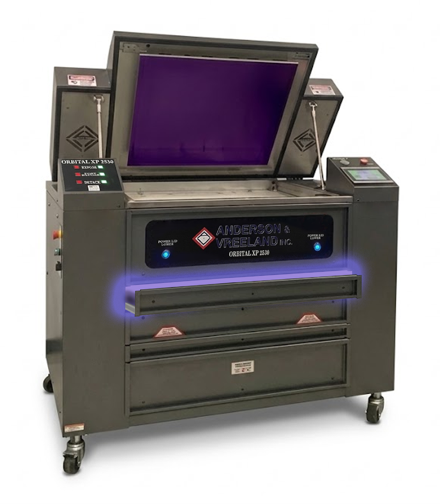
Anderson & Vreeland introduces the Orbital XP LED, the next generation of exposure technology for water-wash flexographic plate making. Building on the proven engineering of the Orbital X and Orbital XP platforms, the system combines UV LED exposure with established design expertise to deliver consistent, repeatable plate quality with less maintenance and no UV-A bulb replacement.
Operational Benefits
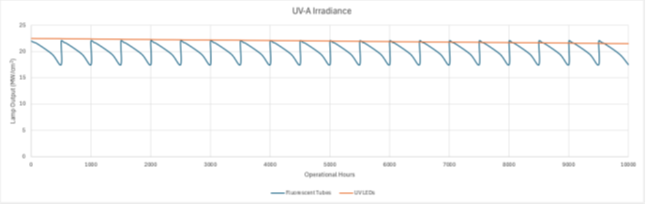
UV LED exposure provides exceptional service life and stable output. Fluorescent lamps lose output rapidly and typically require complete replacement after approximately 500 operating hours to maintain plate consistency. UV LEDs, by comparison, are rated for approximately 10,000 operating hours—about 20 times longer—with only minimal output decline over their lifespan.
- Years of stable operation
- Significantly lower consumable costs
- Less maintenance and associated downtime
- No routine UV-A bulb replacement
UV LEDs also provide full-power UV-A output immediately when energized. Unlike fluorescent lamps, they require no warm-up period. This instant-on performance improves process consistency and shortens plate-making time by eliminating warm-up exposures.
Comparable Plate Quality
The Orbital XP LED is designed to produce results comparable to those achieved with new fluorescent lamps. Exposure times remain similar, while key plate characteristics—including dot size, relief depth, and reverse holdout—closely match established fluorescent-lamp performance. The important difference is long-term stability: exposure times remain consistent throughout the LED service life, and routine lamp replacement is eliminated.
Dot Reproduction
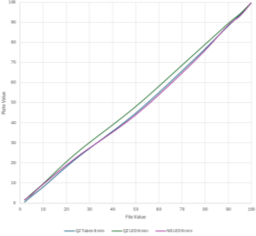
The comparison graph shows dot sizes for two common water-wash plate materials: Cosmolight QZ and Cosmolight NS. A QZ control plate was exposed with fluorescent lamps, while QZ and NS test plates were exposed with UV LEDs using the same main exposure time. Results were highly consistent across all three plates, with only about 2% variation in midtone reproduction.
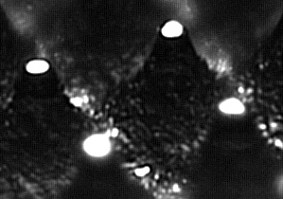
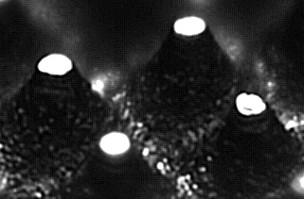
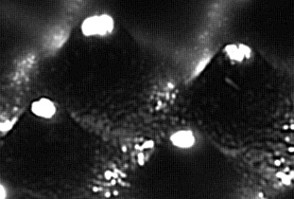
The dot samples below provide a closer visual comparison:
| QZ, Tubes | QZ, LED | NS, LED |
 |
 |
 |
Reverse-Type Holdout
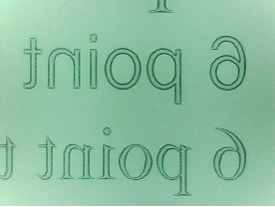
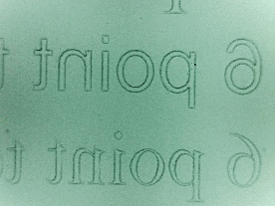
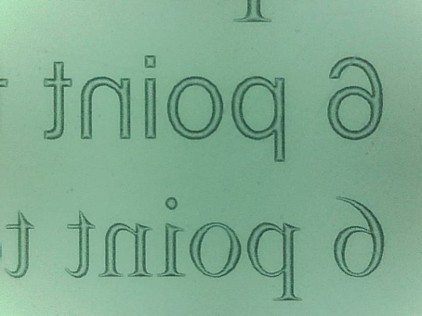
Reverse-type analysis produced similarly consistent results. Even small reverse type remained open across all plate materials and exposure methods, as shown below:
| QZ, Tubes | QZ, LED | NS, LED |
|
|
 |
 |
Simplified Transition to UV LED
This consistency makes the transition to UV LED exposure straightforward. Minor adjustments to back and main exposure times may be required during implementation, but the finished plates remain closely comparable across the two technologies. As a result, users can expect predictable press performance without new fingerprinting or profiling.
By combining predictable conversion results with long service life, stable output, and lower maintenance requirements, UV LED exposure offers a clear path to improved equipment efficiency.
Conclusion
Anderson & Vreeland is pleased to bring the Orbital XP LED to market and to help customers realize the quality, consistency, and operational advantages of UV LED exposure. By delivering plate characteristics comparable to fluorescent-lamp exposure, the system supports predictable press performance and a straightforward transition to LED technology. Long LED service life, stable output, and instant-on operation further reduce consumable costs, maintenance requirements, downtime, and plate-making time. Together, these benefits make the Orbital XP LED a reliable and efficient solution for water-wash flexographic plate production.