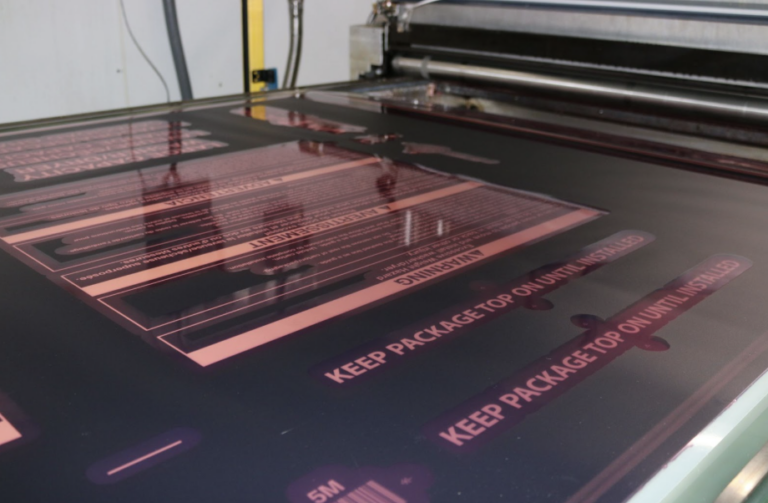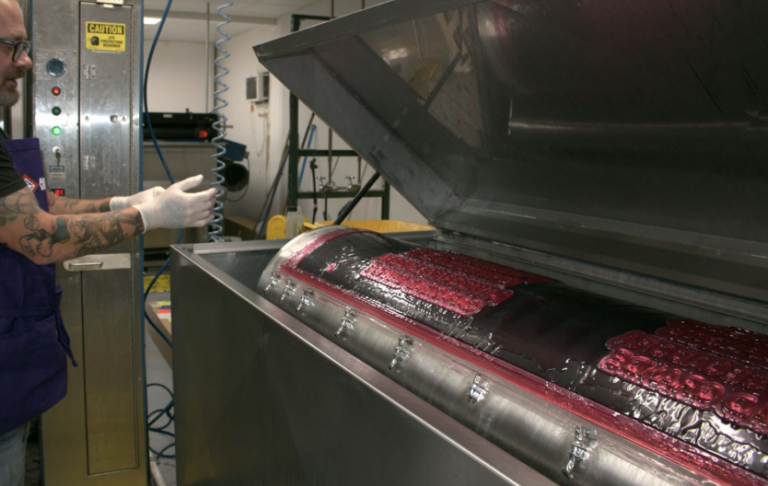

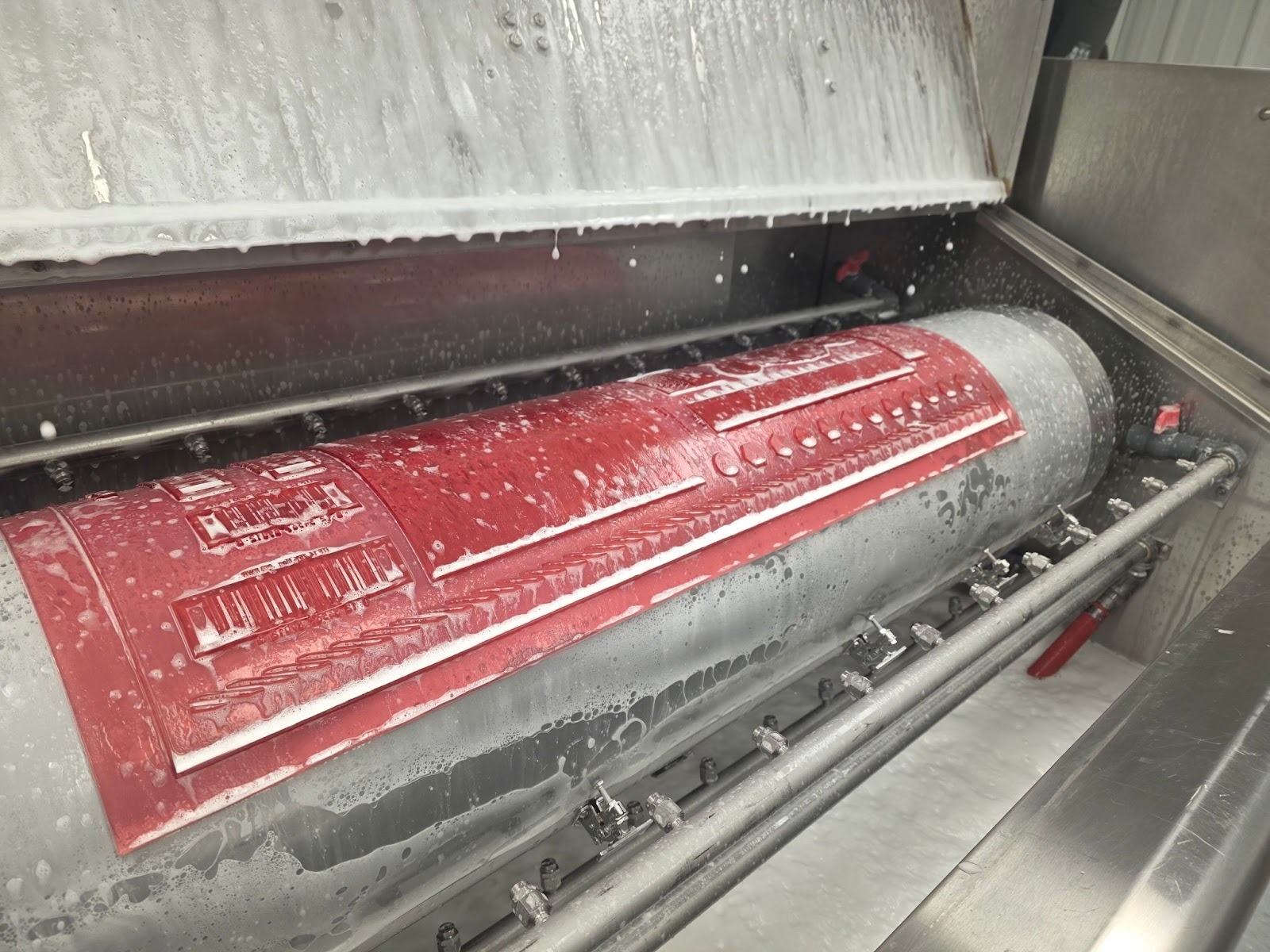
A precisely formulated AVantage washout bath is essential for producing consistent, high-quality, tack-free photopolymer printing plates. The balance between detergent, developer, defoamer, temperature, and bath life directly affects plate cleanliness, relief structure, surface tack, and long-term process stability. When washout baths are mixed, maintained, and refreshed according to disciplined standards, flexographic operations dramatically reduce plate variability, troubleshooting time, and waste.
This whitepaper explains how to design and control a robust AVantage washout bath program around AVWashout, AVDeveloper, AVDefoamer, and AVEnhance. It covers bath formulation for different washout units, the influence of plate size and resin loading on bath life, the role of temperature in washout performance, and the optimization of detack performance with AVenhance. The goal is to help printers understand the “why” behind each parameter so they can adjust intelligently, not just follow recipes.
By implementing the practices outlined here, flexographic printers can turn the AVantage washout bath from a source of uncertainty into a predictable, value-generating system. The result is a higher first pass yield, fewer unplanned bath changes, and consistently tack-free plates that run cleanly through mounting and press.
Introduction: Why AVantage Washout Bath Control Matters
In liquid photopolymer plate making, exposure may define the image, but washout determines how that image actually functions on press. The AVantage washout bath is responsible for removing unreacted resin from the plate surface and relief areas without damaging cured structures or leaving residues. A well-controlled bath produces plates that are clean, dimensionally stable, and easy to detack.
If the AVantage washout bath is poorly formulated or inconsistently maintained, several problems can arise:
- Incomplete removal of unreacted resin, leading to plug-ups, poor relief, or dirty print.
- Excessive foaming causes mechanical issues in the washout unit and uneven cleaning.
- Variations in plate surface tack complicate handling and mounting.
- Short or unpredictable bath life, driving up chemical usage and downtime.
For operations that depend on liquid photopolymer plates, the washout bath is a core process. Treating the AVantage washout bath formulation as a controlled, data-driven system is crucial for long-term success.
Fundamentals of AVantage Washout Bath Chemistry
The AVantage washout bath uses a liquid-based chemistry system that includes three primary components in water:
- AVWashout (detergent) to help emulsify and remove uncured resin.
- AVDeveloper to support the development and cleaning of plate relief areas.
- AVDefoamer to control foam and maintain stable mechanical performance.
Because all components in the AVantage washout bath are liquid, they are easy to dispense accurately and can be blended quickly, even for larger washout units. This supports repeatable formulations across shifts and locations.
A sound AVantage washout bath formulation program involves:
- Knowing the exact water volume of each washout unit.
- Using volumetric or metered additions of AVWashout, AVDeveloper, and AVDefoamer.
- Validating the bath visually and operationally before running production plates.
The better an operation understands the purpose of each chemical in the AVantage washout bath, the more effectively it can react to changes in plate design, resin type, or local conditions.
Recommended AVantage Washout Bath Formulas by Unit Size
Different washout units hold different volumes of water, so the AVantage washout bath must be scaled accordingly. A typical set of starting formulations might look like this:
- For a 3048 system, approximately 70 gallons of water with matched volumes of AVWashout, AVDeveloper, and AVDefoamer.
- For a 4460 system, approximately 120 gallons of water with proportionally increased chemical volumes.
- For a 5280 system, approximately 150 gallons of water with the largest chemical volumes.
These recommended starting points assume that the water volume in the washout tank has been measured accurately. Before standardizing on any AVantage washout bath formulation, operations should:
- Confirm tank volume by filling with water and measuring total fill or by using manufacturer data.
- Adjust specific chemical additions so they represent consistent ratios relative to that volume.
Local water hardness and plate loading patterns may require fine-tuning of AVDefoamer and, in some cases, detergent or developer levels. However, all adjustments should be made relative to known baseline AVantage washout bath recipes, not guesswork.
Step by Step AVantage Washout Bath Preparation
A structured procedure for preparing the AVantage washout bath helps ensure that every shift sets the bath up correctly. A typical sequence includes:
- Verify water volume and level
- Fill the washout unit to the designated operating level with clean water.
- Confirm that the same level is used each time to keep the effective AVantage washout bath volume consistent.
- Mix and add detergent (AVWashout)
- Homogenize AVWashout in its container if it has been stored for a long period.
- Measure and add the required volume to the bath, distributing it evenly if possible.
- Add developer (AVDeveloper)
- Add the recommended volume of AVDeveloper directly into the bath.
- Allow circulation or agitation to disperse the developer uniformly.
- Add defoamer (AVDefoamer)
- Measure the initial recommended amount of AVDefoamer for the AVantage washout bath.
- Add it slowly, avoiding localized pockets of concentrated defoamer.
- Mix and validate
- Set the washout unit temperature according to resin requirements.
- Run at least one full wash cycle with no plate or with a trial plate to blend the bath and evaluate foam behavior.
If excessive foam is observed during mixing or the first cycles, additional AVDefoamer can be added in small increments. A practical approach is to add roughly 8 ounces at a time, allowing the AVantage washout bath to run between additions to avoid overshooting and suppressing foam too aggressively.
Temperature Control in AVantage Washout Baths
Temperature has a strong influence on washout performance, resin removal speed, and plate surface characteristics. However, there is no single universal temperature for all AVantage resins. The correct set point depends on the specific liquid photopolymer resin being used.
To optimize temperature in the AVantage washout bath:
- Consult product data or a local technical representative for recommended temperature ranges for each resin.
- Recognize that higher temperatures generally accelerate resin removal but may increase swelling or screen erosion if taken too far.
- Use reliable temperature control and monitoring, as even small deviations can affect washout dynamics.
When switching between different AVantage resins in the same washout unit, operators may need to adjust the temperature between jobs. This makes clear scheduling and documentation important so that baths are always at appropriate conditions for the plates being processed.
Determining Bath Life and Change Intervals
No AVantage washout bath lasts indefinitely. The life of the bath is controlled by how much unreacted resin and debris it accumulates, the complexity and thickness of plates, and how heavily each plate is loaded with resin prior to washout.
A structured AVantage washout bath formulation program defines bath life in terms of plates processed, resin mass removed, or both. Typical starting expectations might include:
- Bath life in the range of roughly 12 to 18 plates for a standard configuration before performance begins to degrade.
- Washout cycle times on the order of 10 to 15 minutes per plate, depending on plate thickness and image coverage.
To refine these estimates, plants should:
- Maintain a log for each AVantage washout bath that records plate count, plate sizes, and any observed changes in washout quality.
- Track when plates begin to show incomplete cleanout, longer washout times, or other signs that the bath is saturated.
- Use this historical data to set change intervals that balance chemical cost against plate quality and labor efficiency.
Over time, each operation develops a realistic picture of how long a given AVantage washout bath can run before it needs to be drained, cleaned, and refilled with fresh chemistry.
AVenhance and Tack Free Plate Production
Detack is a critical part of liquid photopolymer plate making. Even if a plate has been fully exposed and washed out, residual tack can complicate handling, attract dust, and interfere with mounting. AVenhance is designed to integrate into the AVantage washout bath to address this issue directly.
AVenhance is a chemical detack agent added into the washout unit so that plates emerge from the bath completely tack-free. It is used with specific AVantage photopolymers such as AV Corr LDR and AV Corr 32MLR formulations. When properly applied, AVenhance enhances plate surface quality without requiring a separate detack bath or manual post-treatment.
However, AVenhance interacts with other components of the AVantage washout bath formulation:
- It can affect foam production, often allowing the amount of AVE Defoamer to be reduced, in some cases by as much as half.
- It is not compatible with germicidal treatments in the same bath, so those should be avoided when AVenhance is in use.
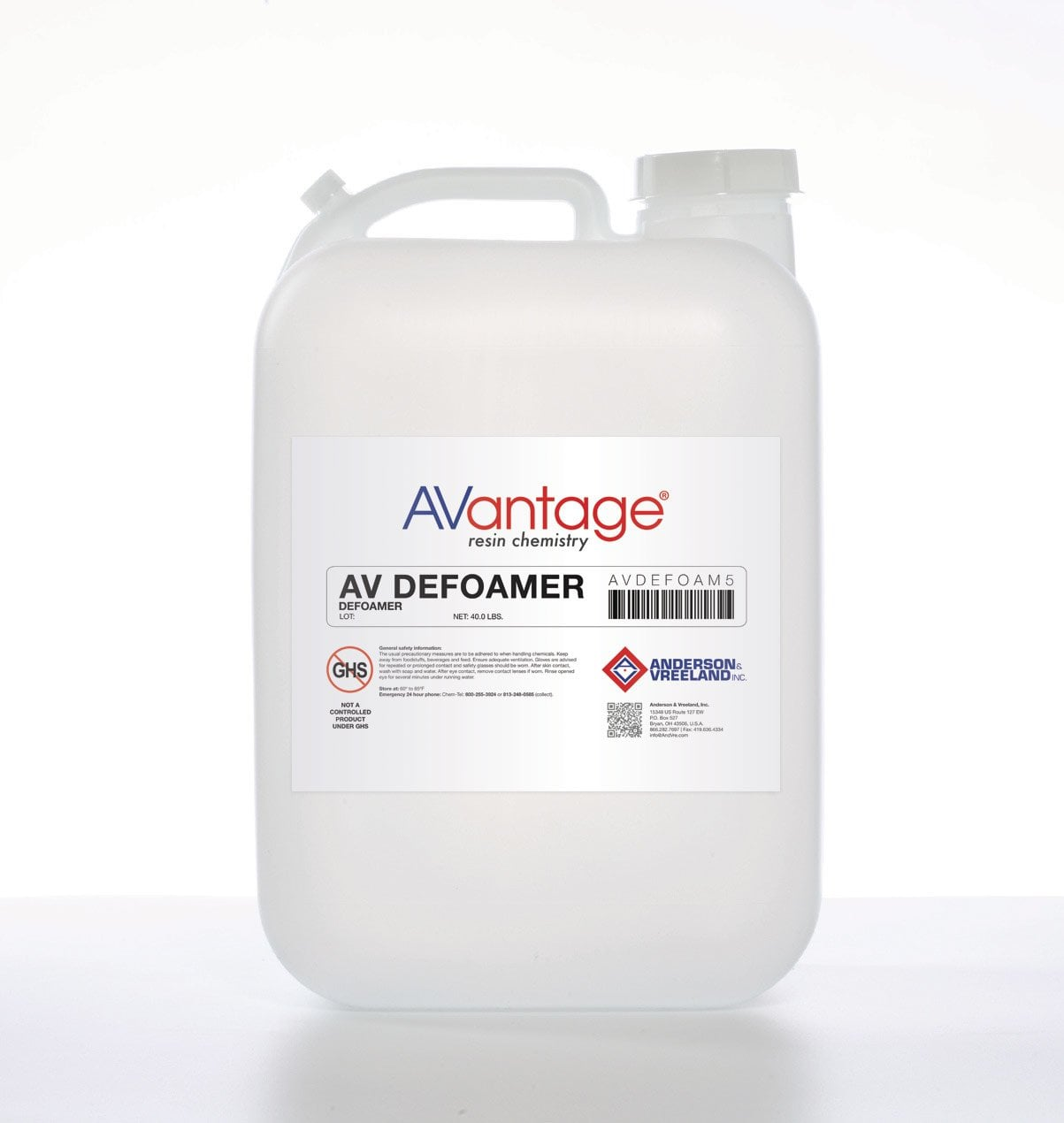
To gain the full benefit of AVenhance, operations should evaluate foam behavior after its introduction, adjust defoamer accordingly, and remove any conflicting additives from the washout system.
Calculating AVEnhance Usage Rates
The amount of AVenhance needed depends on how much plate surface area needs to be rendered tack-free, not simply on the number of plates. Different plate constructions carry different resin loads and therefore demand different AVenhance dosages.
Key factors influencing AVenhance usage in the AVantage washout bath include:
- Plate type, such as lighter I Plate constructions versus more heavily loaded conventional corrugated plates.
- Plate size and thickness, since larger or thicker plates generally hold more resin before washout.
- The size and volume of the washout unit, and whether it operates as a static bath or a feed and bleed system, where fresh chemistry is regularly introduced.
In general, smaller plates in smaller washout units require less AVenhance per cycle, while larger plates and systems demand more. Rather than relying solely on generic recommendations, plants should:
- Estimate resin load per plate by weighing plates before and after washout, especially when setting up a new resin or plate type.
- Use this data to correlate AVenhance dosage with actual resin removed, which improves predictability and avoids overuse.
This approach makes AVenhance an integrated part of the AVantage washout bath formulation, tailored to each operation’s plate mix.
Understanding Bath Life with AVEnhance in Place
When AVenhance is part of the AVantage washout bath, bath life is again a function of resin load, plate mix, and operational patterns. Typical starting expectations might include:
- Bath life on the order of 15 to 20 plates under normal loading conditions before performance begins to fall off.
- Smaller plates, such as those processed in a 3048 unit, carry about 1.5 pounds of resin to washout after reclaiming.
- Larger plates, such as those in a 5280 system, carry around 4.5 pounds of resin on their surfaces.
Intermediate configurations like I Plates might carry 3 to 3.5 pounds of resin after reclaiming. By weighing plates before and after washout in each category, operations can calculate how much resin is entering the AVantage washout bath over time and use that number to set realistic bath life targets.
This mass-based approach allows more precise control than simply counting plates, especially in mixed production environments where plate sizes and designs vary widely.
Feed and Bleed Strategies for Large Washout Systems
In larger or continuously operated washout units, a feed and bleed strategy helps maintain bath chemistry in a more stable range. Instead of completely replacing the AVantage washout bath after a fixed number of plates, a portion of the bath is periodically drained and replaced with fresh water and chemicals.
Key elements of a feed and bleed approach include:
- Defining the base AVantage washout bath formulation for the full volume of the unit.
- Establishing the volume to be removed and replenished on each cycle or batch of plates.
- Proportionally adding AVE Washout, AVE Developer, AVE Defoamer, and AVenhance as part of the feed to maintain target concentrations.
This method can extend the effective life of the washout bath while smoothing out spikes in contamination levels. It does, however, require careful tracking, since underfeeding chemicals will gradually degrade washout performance, while overfeeding creates unnecessary cost and may alter bath behavior.
For each operation, feed and bleed parameters should be derived from measured plate loads and validated through plate quality checks.
Quality Control and Troubleshooting in AVantage Washout Bath Operation
Even well-designed AVantage washout bath systems can drift out of optimal range if not actively monitored. Quality control for the AVantage washout bath should combine visual inspection, plate performance data, and basic records.
Useful QC practices include:
- Documenting initial bath formulation, including volumes of water, AVE Washout, AVE Developer, AVE Defoamer, and AVenhance.
- Logging plate type, size, thickness, and count for each bath or feed and bleed interval.
- Recording signs of incomplete washout, excessive tack, unusual foam, or changes in washout time.
- Investigating anomalies promptly by checking chemical levels, temperature, and any recent process changes.
Common troubleshooting scenarios:
- Excessive foam: Verify AVE Defoamer charge, consider incremental additions, and check whether AVenhance usage has changed.
- Incomplete washout: Confirm temperature, bath age, and detergent/developer levels. Evaluate whether plate designs have become heavier or more intricate without adjusting parameters.
- Residual tack: Review AVEnhance dosage and mixing, and verify that exposure conditions remain appropriate.
By closing the loop between AVantage washout bath conditions and plate performance, printers build a resilient process that can accommodate new jobs and materials without constant trial and error.
Business Impact of Optimized AVantage Washout Bath Programs
A disciplined AVantage washout bath formulation and control strategy provides benefits far beyond the chemistry itself. When washout is predictable, and plates emerge consistently clean and tack-free, operations enjoy:
- Higher first pass yield, with fewer plates needing rework or replacement.
- Reduced waste of liquid photopolymer resin through better reclaim and more efficient washout.
- Lower labor costs associated with troubleshooting, manual cleaning, or emergency bath changes.
- Improved pressroom performance, since plates arrive stable and ready to run.
Over time, these gains translate into measurable financial and competitive advantages. Customers see more consistent print, and internal teams spend less time putting out fires and more time improving processes.
Partnering with Anderson & Vreeland on AVantage Washout Optimization
Anderson & Vreeland supports flexographic printers through a combination of AVantage washout bath chemistry, AVenhance technology, and technical expertise. A strong partnership helps ensure that each plant’s washout system is sized, formulated, and maintained to match its production mix and quality goals.
By working with Anderson & Vreeland, operations can:
- Validate their current AVantage washout bath formulation against best practice guidelines.
- Optimize AVEnhance usage for specific plate types and washout unit sizes.
- Implement feed and bleed systems where appropriate to improve consistency and reduce downtime.
- Train operators and supervisors in the principles behind AVantage washout bath performance so adjustments are made knowledgeably.
Contact Anderson & Vreeland Today
For guidance on AVantage washout bath setup, troubleshooting, or integration with broader liquid photopolymer workflows, contact Anderson & Vreeland. A well-controlled AVantage washout bath is a powerful lever for plate quality, productivity, and customer satisfaction.
Anderson & Vreeland
Phone: (866) 282-7697
Your Partner in Flexographic Printing Excellence
© 2026 Anderson & Vreeland. AVantage® is a registered trademark. This whitepaper is provided for informational purposes and represents best practices based on extensive industry experience. Specific results may vary based on operational conditions, equipment, and implementation consistency.