
Executive Summary
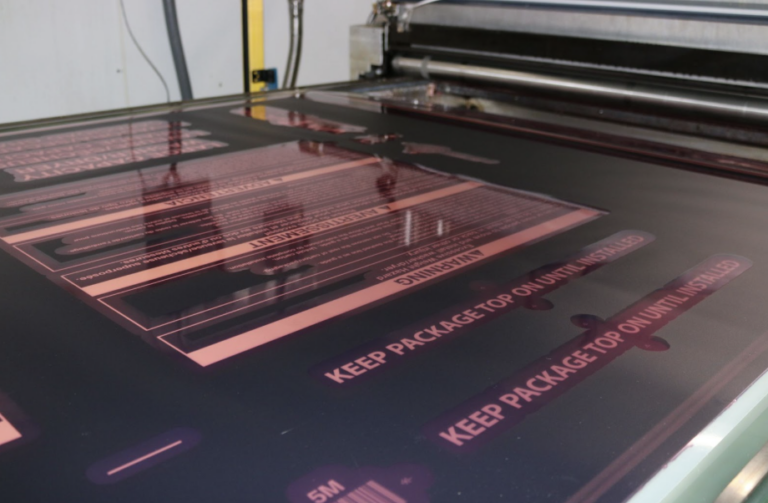
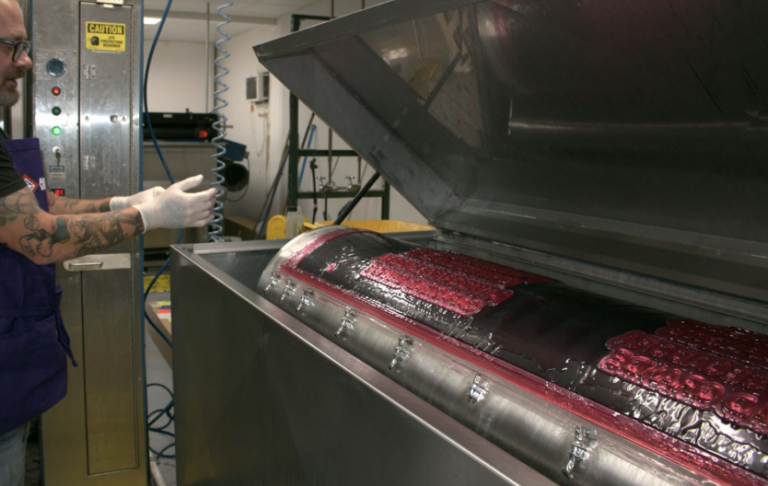
Photopolymer plate processing environments play a decisive role in flexographic print quality, productivity, and overall cost control. A well-designed plate processing room protects plates from dust, stray UV light, and unstable temperature and humidity, while also safeguarding operator health and simplifying daily operations. Anderson & Vreeland have seen across many implementations that consistent, high-quality plate output is rarely achievable without equally consistent environmental control.
Here we’ve presented a practical, in-depth framework for optimizing photopolymer plate processing rooms, from fundamental design principles to daily operating disciplines. It details how to maintain a near dust-free environment, specify effective ventilation and airflow, control lighting and UV exposure, and hold temperature between approximately 70 and 75 degrees Fahrenheit with relative humidity in a controlled mid-range. It also covers best practices for selecting and finishing ceilings, walls, and floors so that surfaces do not shed particles and can be cleaned quickly and thoroughly.
Introduction: Why Photopolymer Plate Processing Environments Matter
Photopolymer plate processing is the backbone of high-quality flexographic printing, and the room where plates are processed is just as critical as the plate material and equipment. An optimized photopolymer plate processing environment directly affects plate consistency, press uptime, and overall profitability.
Read on to learn how to design and maintain a high-performance photopolymer plate processing room, outlining practical specifications, best practices, and implementation tips that Anderson & Vreeland have seen succeed in real production environments. The focus is on controlling dust, ventilation, lighting, temperature, humidity, surfaces, and layout so that every photopolymer plate meets demanding quality expectations.
For clarity and search visibility, the core keyword used throughout is photopolymer plate processing, along with variations such as photopolymer plate processing room, plate processing environment, and plate processing specifications.
Strategic Role of the Photopolymer Plate Processing Room
A well-designed photopolymer plate processing room is more than a utility space. It functions as a controlled production environment where chemistry, light, and mechanical action must be precisely managed.
If the photopolymer plate processing room is poorly controlled, even the best plates and imaging systems cannot deliver consistent results. Plates may exhibit defects, dimension changes, inconsistent relief, or surface contamination that becomes visible as wasted impressions and customer complaints on the press.
Investing in the right photopolymer plate processing room design yields:
- More consistent plate quality and fewer remakes.
- Higher pressroom efficiency through faster makeready and fewer plate-related stops.
- Improved operator safety, comfort, and retention.
- Lower long-term costs due to reduced waste, longer equipment life, and fewer emergency repairs.
Core Principles for Photopolymer Plate Processing Environments
Every successful photopolymer plate processing environment is built around a few core principles that influence all subsequent design choices:
- Keep the environment as dust-free as possible.
- Maintain stable temperature and humidity within tight tolerances.
- Control light and UV exposure at all times.
- Provide adequate ventilation and air quality for both plates and people.
- Use surfaces and room finishes that are easy to clean and do not shed particles.
- Design the room layout around the photopolymer plate processing workflow, not the other way around.
When these principles are consistently applied, the photopolymer plate processing room becomes a predictable, repeatable production space instead of a constant troubleshooting challenge.
Designing a Dust-Free Plate Processing Room
Dust is the single most common environmental contaminant affecting photopolymer plate processing. Any particulate that settles on a plate during imaging, exposure, washout, or drying can translate directly into print defects on press.
A dust-controlled photopolymer plate processing room does not require full cleanroom construction, but it does require deliberate design choices to prevent, capture, and remove particulates.
Key strategies include:
- Locating the plate processing room away from high traffic areas, loading docks, and converting lines that generate dust and debris.
- Limiting through traffic by providing clear, dedicated entrances and exits that connect to cleaner interior spaces.
- Establishing basic gowning practices, such as clean lab coats, lint-free garments, and shoe cleaning mats at entrances.
- Scheduling regular cleaning of all horizontal surfaces, including equipment tops, shelves, and light fixtures.
- Avoid open storage of cartons, corrugated packaging, and other dust-generating materials in the plate processing environment.
The more predictably a facility can keep airborne and settled dust out of the photopolymer plate processing room, the more consistent plate results will become.
Ventilation, Airflow, and Safety in Plate Processing
Proper ventilation is central to both plate quality and operator health in a photopolymer plate processing room. Inadequate ventilation can allow fumes from washout chemistry, cleaning solutions, and other process materials to accumulate while also failing to remove airborne dust.
An effective ventilation system for photopolymer plate processing should:
- Introduce sufficient fresh air to maintain healthy indoor air quality for operators.
- Use high-efficiency filtration on the supply air to keep dust and fibers out of the plate processing environment.
- Provide local exhaust for washout units, chemical storage areas, and other sources of vapors.
- Maintain gentle, controlled airflow patterns that do not stir up dust or create drafts across plate surfaces.
Safety is inseparable from ventilation. All operating personnel should understand and follow the safety recommendations in product instructions, labels, and Safety Data Sheets (SDS). The photopolymer plate processing room must support safe chemical handling with:
- Clearly labeled chemical storage areas.
- Spill response materials and procedures.
- Appropriate eyewash stations and safety showers where required by applicable regulations.
- Training in the safe operation of all plate processing equipment and ventilation systems.
By integrating safety into the design of the photopolymer plate processing environment, facilities protect operators while protecting plate quality.
Room Layout and Workflow Optimization
The physical layout of the photopolymer plate processing room should reflect the actual process path, from plate receipt through imaging, exposure, washout, drying, finishing, and storage. Poor layout increases handling risk, tracking errors, and contamination.
A well-organized photopolymer plate processing room layout typically includes:
- A receiving or staging area for incoming plates and materials.
- A clean, low-traffic imaging area where dust and stray light are tightly controlled.
- An exposure area with appropriate UV equipment and shields.
- A washout and drying area with local exhaust and splash-resistant finishes.
- A finishing and inspection area for quality checks and final handling.
- A dedicated storage area for processed plates awaiting pressroom use.
Within this layout, workflow should follow a logical, one-way path that avoids backtracking and cross traffic. Equipment spacing must allow easy access for loading, unloading, and maintenance without forcing operators to brush against plates, racks, or walls.
Furniture and work surfaces in the plate processing environment should be:
- Constructed of non-shedding materials such as metal or sealed polymer.
- Smooth and easy to wipe down with mild cleaning agents.
- Designed with minimal ledges or crevices where dust can accumulate.
- Positioned to support safe ergonomics during repetitive plate handling tasks.
When the layout supports both workflow and cleanliness, photopolymer plate processing becomes faster, safer, and more consistent.
Lighting and UV Management for Photopolymer Plate Processing
Light control is crucial in any photopolymer plate processing room because the same UV energy used to harden plate polymers can unintentionally fog or partially expose plates. The goal is to provide ample visible light for safe work while eliminating harmful UV.
Best practices for lighting in a photopolymer plate processing environment include:
- Using fixtures that minimize dust collection, such as sealed, smooth housings without exposed ledges.
- Providing adequate illumination levels so operators can clearly inspect plates and read controls without shadows.
- Covering all light sources that may emit UV, including fluorescent tubes and exposed windows, with UV filter films or lenses.
- Considering modern LED fixtures are designed with minimal UV output, especially in critical imaging and handling areas.
Windows in a photopolymer plate processing room should either be eliminated, blocked, or covered with high-quality UV filtering films. These films allow visible light to pass while blocking the wavelengths that initiate photopolymerization. Over time, the investment in UV filters often pays for itself by preventing plate damage and reducing scrap.
Regular inspection and replacement of UV filters and lamp covers is an important part of ongoing plate processing quality control. A strong light management plan ensures that photopolymer plates are only exposed when and where intended.
Temperature and Humidity Control
Photopolymer plate processing chemistry is sensitive to temperature and humidity. If the room is too hot, cold, dry, or humid, plates can respond unpredictably during imaging, exposure, and washout.
For most photopolymer plate processing rooms, a practical target is:
- The temperature held consistently between 70 and 75 degrees Fahrenheit, or roughly 21 to 24 degrees Celsius.
- Relative humidity is maintained between 55 percent and 65 percent.
Within these ranges, photopolymer plates typically exhibit stable dimensions, predictable relief formation, and reliable adhesion during mounting. Outside these ranges, plates may shrink, expand, or swell differently, and static buildup may become a problem when humidity is too low.
Achieving stable conditions in a photopolymer plate processing environment typically requires:
- An appropriately sized HVAC system, taking into account equipment heat loads and occupancy.
- Accurate temperature and humidity sensing at representative points in the room.
- Dehumidification or humidification as dictated by the climate and season.
- Proper insulation, sealed doors, and limited air leakage to prevent intrusion of unconditioned air.
By treating temperature and humidity control as integral elements of photopolymer plate processing specifications, plants can dramatically reduce unexplained variability in plate performance.
Ceilings, Walls, and Floors for Cleanability and Durability
The surfaces that define the physical envelope of the photopolymer plate processing room have an outsized impact on cleanliness. Materials that shed particles, flake, or trap dust will constantly undermine efforts to maintain a clean environment.
Suitable surface choices for a photopolymer plate processing environment include:
- Ceilings constructed of smooth finish drywall or dust-free, non-flaking panels that can be wiped down.
- Walls are finished with smooth, low-glare paint that is washable and resistant to normal cleaning agents.
- Floors made of solvent-resistant tile, epoxy-sealed concrete, or compatible rubber floor systems that stand up to foot traffic and occasional chemical exposure.
Design details also matter:
- Avoid ledges, chair rails, deep moldings, or textured panels that create dust traps on walls.
- Use coved bases at wall-to-floor transitions where possible to simplify cleaning and prevent dirt buildup in corners.
- Seal penetrations for conduits, pipes, and ducts so that they do not become hidden dust collectors.
By selecting the right surfaces, the photopolymer plate processing room becomes much easier to clean and keep clean. This, in turn, stabilizes the photopolymer plate processing environment and supports long-term quality.
Airflow and Filtration in the Plate Processing Environment
Airflow design determines how air moves through the photopolymer plate processing room and how effectively it carries away dust and vapors. Turbulent, uncontrolled airflow can blow contaminants across plate surfaces. A thoughtful airflow strategy helps maintain both cleanliness and comfort.
An effective airflow pattern for photopolymer plate processing often includes:
- Multiple ceiling-mounted supply ducts distribute clean, filtered air evenly over the work area.
- Low-level return ducts or grilles that pull air downward past the work zone, removing particles instead of recirculating them at plate height.
- A slight pressure differential that keeps cleaner air flowing from the plate processing room toward adjacent, less clean spaces.
Filtration is central to this strategy. High-efficiency filters on supply air should be selected to remove fine dust and fibers that would otherwise settle on plates. Filter maintenance schedules must be followed rigorously so that airflow rates and filtration performance do not degrade over time.
In some photopolymer plate processing rooms, local extraction hoods or capture devices may be used near washout units or chemical handling areas. These systems should be balanced with room supply air to avoid drafts while ensuring contaminants are captured at the source.
Operational Practices that Sustain a High Quality Plate Processing Room
Even a perfectly designed photopolymer plate processing environment will not perform as intended without disciplined daily practices. Standard operating procedures and culture are just as important as hardware and construction.
To sustain a high-quality photopolymer plate processing room, operations should:
- Establish daily cleaning routines for work surfaces, equipment exteriors, and floors.
- Limit food, drink, and unnecessary personal items in the plate processing area.
- Train all operators in the reasons behind environmental controls so they understand the link between their actions and plate quality.
- Document and periodically review environmental incidents that correlate with plate defects, and adjust procedures accordingly.
Access control is another critical practice. Limiting entry to authorized personnel and suppliers reduces unnecessary traffic and keeps the photopolymer plate processing room focused on its core function. Signage and clear expectations help reinforce this culture.
When operational discipline aligns with room design, photopolymer plate processing becomes a reliably controlled process rather than a reactive one.
Business Impact of Optimized Photopolymer Plate Processing
The technical specifications discussed in this whitepaper are ultimately justified by business results. When a facility improves its photopolymer plate processing environment, it typically sees benefits across several dimensions:
- Lower plate scrap and fewer reworks as environmental defects disappear.
- Faster makeready times on press because plates arrive consistently and are predictable.
- Better print quality that helps retain existing customers and win new business.
- Longer effective life for plate processing equipment, reducing capital and maintenance costs.
- Enhanced safety and comfort that support workforce stability and engagement.
In many operations, a small reduction in monthly plate waste or a modest improvement in press uptime can quickly offset the investment in improved HVAC, filtration, lighting, or surface upgrades. Treating the photopolymer plate processing room as a strategic asset creates a clear return on investment.
Partnering with Anderson & Vreeland on Plate Processing Environments
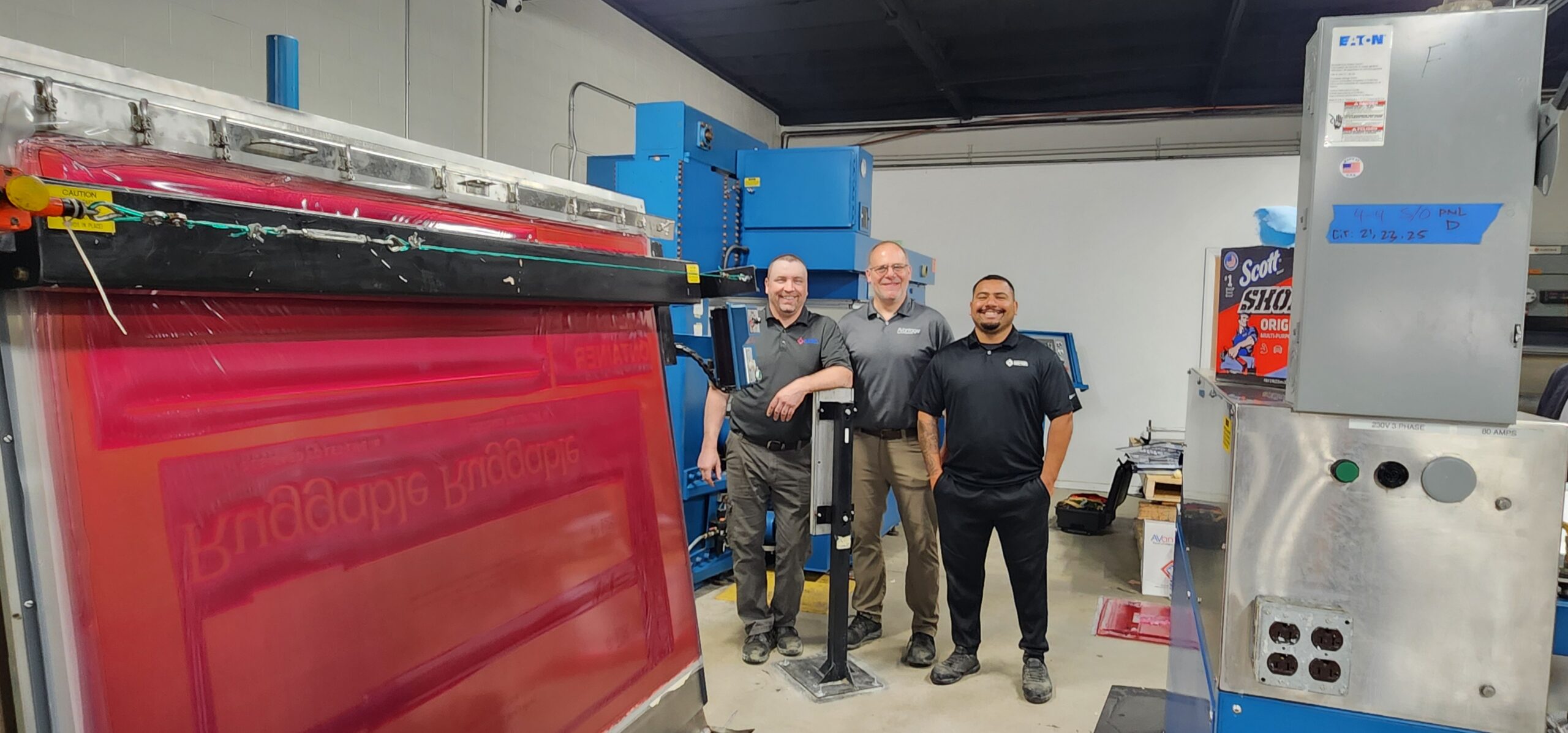
Anderson & Vreeland has extensive experience helping printers design and optimize photopolymer plate processing rooms to support demanding flexographic applications. Equipment, consumables, and environmental guidance are treated as an integrated system so that the photopolymer plate processing environment and the technology within it work together.
Whether a facility is building a new plate processing room, upgrading an existing space, or troubleshooting chronic plate issues, Anderson & Vreeland can:
- Evaluate current photopolymer plate processing conditions and identify gaps.
- Recommend practical improvements in ventilation, lighting, temperature control, and layout.
- Specify compatible equipment, materials, and room finishes that support long-term performance.
- Provide training and ongoing support to keep the plate processing environment optimized as production needs evolve.
For additional information about designing a high-performance photopolymer plate processing room, or to discuss specific requirements, contact Anderson & Vreeland. Together, it is possible to transform the photopolymer plate processing environment into a powerful lever for print quality, efficiency, and competitive advantage.
Anderson & Vreeland
Phone: (866) 282-7697
Your Partner in Flexographic Printing Excellence