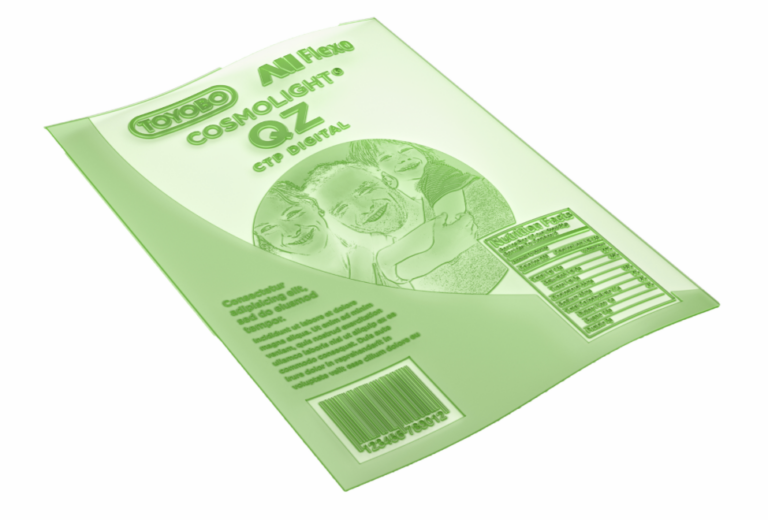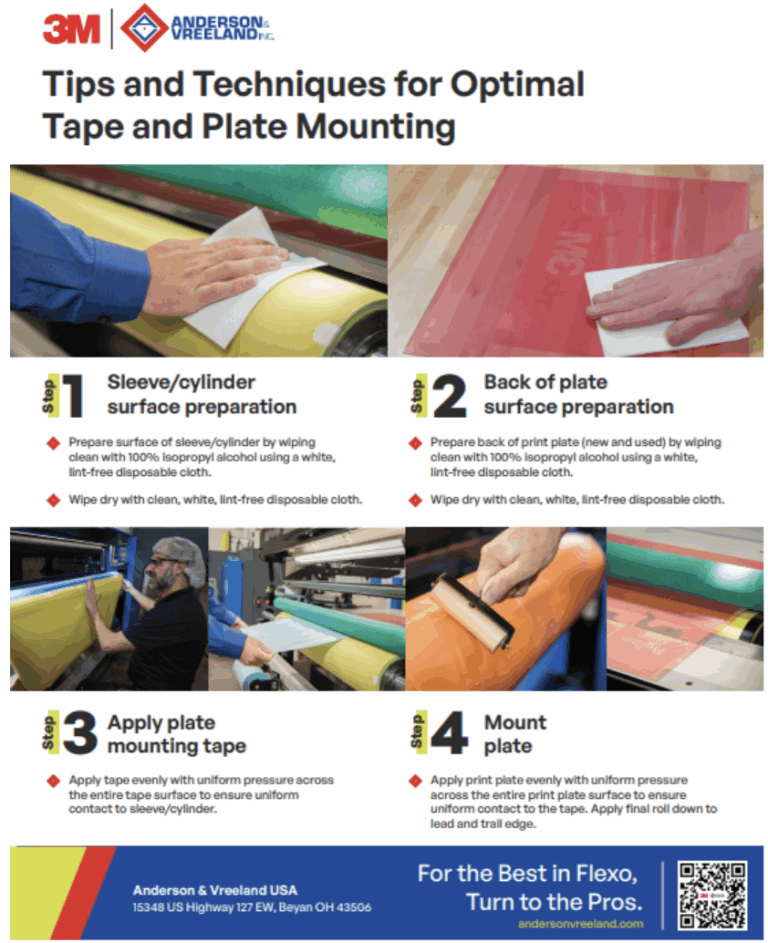
Anderson & Vreeland Inc. is sharing key photopolymer trends and equipment advancements impacting their customers in the flexographic printing industry. The company aims to educate its customer base on modern technology developments in flexographic printing photopolymer plates and platemaking equipment. This resource will provide additional information and support for customers looking to stay ahead in the industry.
The flexographic printing industry is seeing notable shifts in photopolymer technology and equipment. Understanding flexographic platemaking innovation is essential for customers to make informed decisions about their processes and investments.
Key Trends in Flexographic Platemaking Innovation
Flexibility: Modern photopolymers are designed for use with both UV LED and Fluorescent lighting, with increasing improvements in throughput and overall plate quality, while ensuring compatibility with solvent and thermal processes. Image reproduction capabilities are evolving to meet the demands of advanced surface screens. Cleaner printing practices are now a baseline expectation, with a greater emphasis on UV LED compatibility and screening capabilities.
Substrate Compatibility: There is a growing demand for photopolymers that work well with paper substrates. This is achieved through softer polymers or combinations of hard polymers with appropriate screening and tape solutions, aligning with the increasing use of paper in place of plastic. Plate solutions that are capable of printing across multiple substrate types is a growing need.
Corrugated Printing: While there isn’t a significant shift in materials, the focus is on enhancing productivity with LED technology. Cost remains a critical factor in formulation and production, pushing sheet polymer providers to produce thinner materials.
Complexity Management: Despite the introduction of new polymers and supplier mergers, the market has not seen a significant reduction in the variety of formulations available. Simplification of portfolios is needed, unlike the streamlining that is occurring with surface screen options.
Equipment Advancements: Photopolymer development has not expanded as quickly as equipment solutions in recent years. New polymers continue to be developed specifically for UV LED curing, resulting in products marketed as “UV LED optimized.”
“The ongoing shift towards high-intensity UV LED exposure technology, operating above the 50 mW/cm2 threshold, marks a significant advancement in achieving flat top dots through effective oxygen inhibition without the need for additional platemaking consumables or processes, like lamination. This allows for more efficient initiation and superior results,” says Ryan Vest, Director, R&D and AVantage Technology.
“While lower intensity options provide flexibility to retain legacy work and standard polymer behavior, ensuring a comprehensive approach to photopolymer processing.”
Equipment and Technology Driving Flexographic Platemaking Innovation
In equipment, energy utilization, and robustness are increasingly important. Automation has seen slower adoption rates due to the larger footprint and specific technology requirements it often entails. Software improvements are centered around the Internet of Things (IoT) and data exchange for process optimization, where AI is expected to play a significant role in simplifying operations as different systems become more interconnected.
Energy Efficiency: Equipment manufacturers are focused on improving energy use and overall system reliability. These improvements represent critical aspects of flexographic platemaking innovation as the industry moves toward more sustainable operations.
Software and AI: Software is being developed to facilitate data exchange and process optimization, with AI potentially simplifying these processes as systems become more interconnected. The complexity of the materials portfolios creates challenges here.
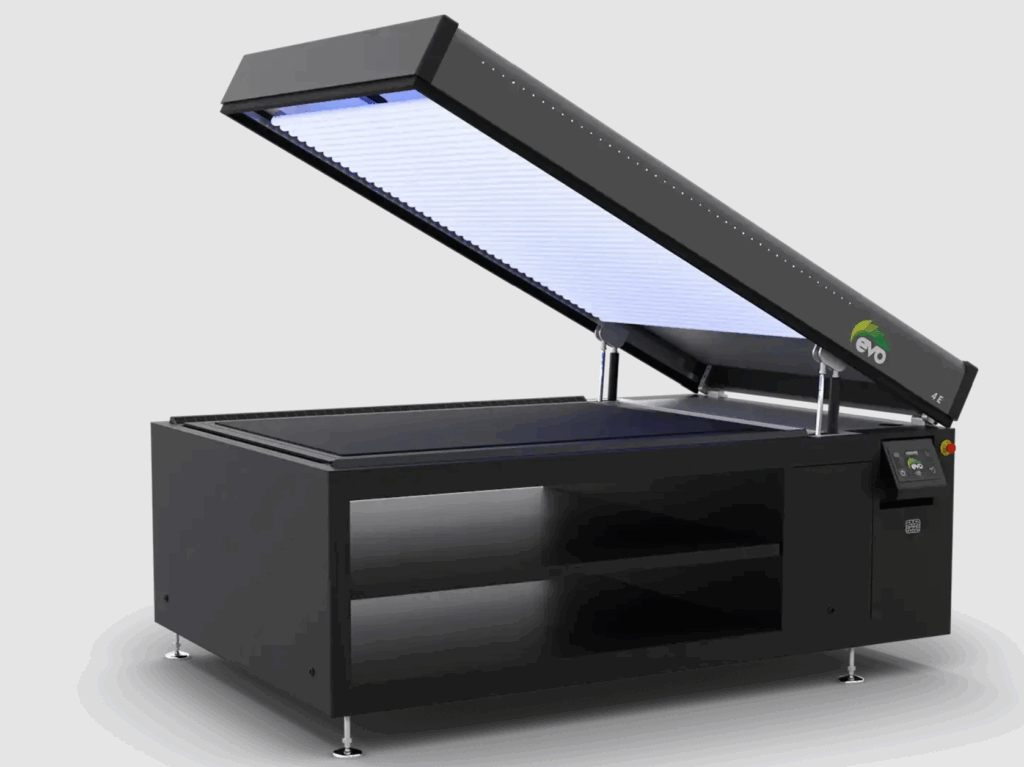
Exposure Technology: A large amount of UV LED options have surfaced in the last 3-5 years, currently favoring high-intensity solutions for high-end screen work over lower-intensity options designed as replacements for fluorescent bulbs, but the latter in increasing in adoption rate. High-intensity systems effectively bypass oxygen inhibition, leading to flat-top dots, while low-intensity options retain legacy polymer behavior.
Automation Considerations: While automation remains a factor, many platemakers prioritize flexibility over highly automated, specific-use systems, with system size also being a key consideration.
The Future of Flexographic Platemaking Innovation
Future developments are expected to bring a convergence in equipment options, with lower-intensity solutions potentially being impacted by “DIY” options from Original Equipment Manufacturers (OEMs), and high-intensity systems aiming to offer their high-value, simple solution at a reasonable cost.
Polymer technology will continue to adapt to high-end solutions, requiring customers to carefully evaluate their polymer and process technology choices. The continued evolution of flexographic platemaking innovation will require simplification of the change management process and ease of adoption to more effectively drive future change.
Ready to Embrace the Latest in Flexographic Platemaking Innovation?
At Anderson & Vreeland, we’re committed to helping you navigate the evolving landscape of photopolymer technology and platemaking equipment. Whether you’re looking to upgrade to UV LED systems, optimize your current processes, or explore new polymer solutions for diverse substrates, our team of experts is here to guide you.
Get in touch with Anderson & Vreeland to learn more about our cutting-edge platemaking solutions and discover which innovations are right for your business.