
Executive Summary
Liquid photopolymer resin safety is fundamental to a reliable, profitable flexographic operation. Effective liquid photopolymer resin management combines robust safety practices, regulatory awareness, and technically sound plate-making procedures. When printers treat AVantage® resins and related chemicals with the same rigor as other industrial materials, they reduce health risks, prevent downtime, and protect the long-term performance of their plates and equipment.
This article provides an in-depth framework for building a safe and efficient liquid photopolymer resin program. It covers risk awareness, personal protective equipment (PPE), ventilation and exposure control, housekeeping, reclaim and reuse of liquid photopolymer resin, film negative requirements, washout chemistry management, and plate setup calculations. The goal is to help operations transform liquid photopolymer resin from a perceived risk into a controlled, value-generating asset.
While the focus is on AVantage® liquid photopolymer resin and related systems, the principles apply broadly to flexographic plants looking to improve safety and consistency. By adopting the best practices described here and consulting Safety Data Sheets (SDS) and regulatory standards, printers can build a safer workplace, maintain compliance, and deliver high-quality plates that support outstanding print results.
Introduction: Why Liquid Photopolymer Resin Safety Matters
Liquid photopolymer resin is central to many flexographic workflows, especially where high plate variability, deep relief, or unique formats are needed. At the same time, these resins and their associated cleaners, detergents, and washout solutions must be managed carefully to protect people and the environment.
Safe liquid photopolymer resin handling is not simply a compliance exercise. It directly affects plate quality, uptime, and brand reputation. Poor practices can lead to skin or eye injuries, sensitization in key personnel, contamination of plates, and unplanned shutdowns while incidents are investigated or corrected.
A structured liquid photopolymer resin handling program should therefore aim at three core objectives:
- Protect workers from acute and chronic exposure.
- Maintain consistent, predictable plate-making performance.
- Demonstrate due diligence to customers, regulators, and insurers.
The following sections outline how Anderson & Vreeland customers can meet these objectives with a practical, implementable approach.
Understanding Hazards and Sensitivities of Liquid Photopolymer Resin
Every liquid photopolymer resin system carries inherent chemical hazards. Workers may experience eye irritation, skin irritation, or allergic skin sensitization when exposed to uncured resin, detergents, or processing solutions, especially over time. Some individuals are more sensitive than others and can develop reactions at exposure levels that cause no symptoms in coworkers.
A risk-aware approach to liquid photopolymer resin safety includes:
- Reviewing the Safety Data Sheets (SDS) for all resins, cleaners, detergents, and auxiliaries before use.
- Identifying substances with the potential to cause irritation, respiratory effects, or sensitization.
- Communicating clearly that sensitivity varies and that early reporting of discomfort is encouraged and supported.
Employers should treat sensitization as a serious occupational health concern. Workers who develop allergic responses may require reassignment away from direct liquid photopolymer resin handling. The sooner the early signs are noticed and addressed, the less likely long-term impairment or lost talent becomes.
Foundations of Safe Work Practices
Safe work practices are the operational backbone of a successful liquid photopolymer resin handling program. They take the information in SDS documents and turn it into specific, repeatable behaviors on the shop floor.
Key elements include:
- Good industrial hygiene practices, such as minimizing direct contact with uncured liquid photopolymer resin and promptly cleaning spills.
- Clear procedures for receiving, transferring, mixing, and reclaiming photopolymer materials.
- Training that links daily tasks to actual risks, so operators understand why procedures matter.
Safe work practices should be formalized in written procedures, integrated into onboarding and recurrent training, and reinforced through supervision and peer culture. When operators see that management prioritizes safety in liquid photopolymer resin work, they are more likely to follow guidelines consistently.
Personal Protective Equipment for Liquid Photopolymer Resin
Personal Protective Equipment (PPE) provides a critical barrier between workers and liquid photopolymer resin, but it is only effective if properly selected, used, and maintained. For most liquid photopolymer resin applications, PPE focuses on skin, eyes, and occasionally respiratory protection, depending on ventilation and process characteristics.
Skin protection
Skin contact with uncured liquid photopolymer resin should be avoided as a matter of policy. Best practices include:
- Wearing protective gloves whenever handling resins, detergents, or processing solutions.
- Using disposable gloves or durable seamless or vinyl gloves for short-duration tasks, provided they are inspected, cleaned when reusable, and replaced when degraded.
- Recognizing that no glove lasts indefinitely and that swelling, cracking, or visible contamination indicates time for replacement.
Handwashing is essential. Workers should wash their hands after removing gloves and before leaving the work area to avoid unintentionally spreading liquid photopolymer resin or chemicals to the face, personal items, or other parts of the plant.
Protective clothing
Contaminated clothing can become a secondary source of exposure. Recommended practices:
- Remove any clothing that has come into significant contact with liquid photopolymer resin or chemicals as soon as practical.
- Launder work garments before reuse, preferably through dedicated industrial laundry services or, if laundered at home, washed separately from household clothing.
- Encourage employees to report persistent irritation or rashes promptly so adjustments to duties or PPE can be made.
Eye protection and UV safety
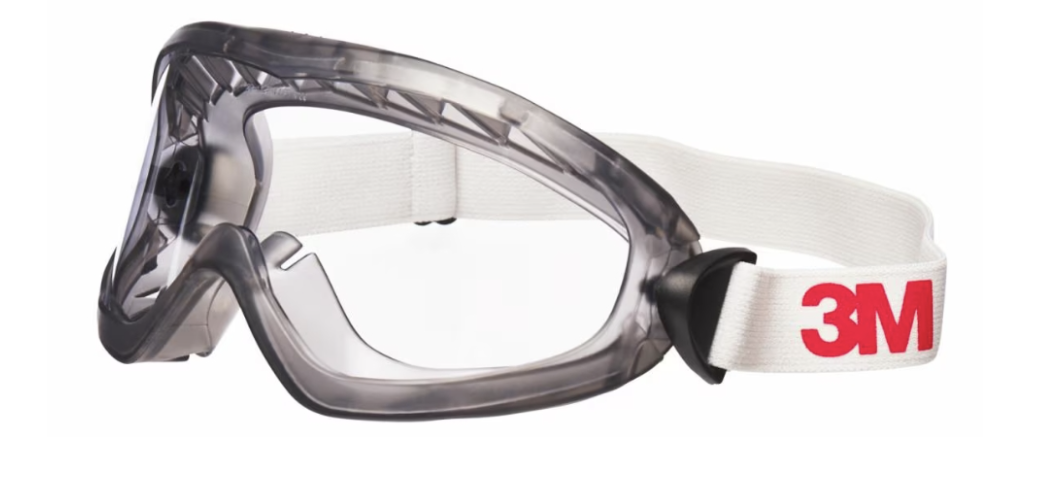
Liquid photopolymer resin handling and plate making involve both liquid chemicals and UV exposure units. Both present eye hazards. For robust liquid photopolymer resin safety:
- Safety glasses with side shields should be worn anytime chemicals or liquid resins are in use, especially where splashes are possible.
- UV protective eyewear should be used during testing, maintenance, or any work that requires viewing active UV light sources in exposure units.
Exposure to UV can cause photokeratitis, a painful condition often described as feeling like sand in the eyes and accompanied by tearing and light sensitivity. Preventing direct UV exposure is therefore as important as protecting against splashes.
Ventilation, Inhalation Controls, and Ingestion Prevention
While liquid photopolymer resin is primarily a dermal and ocular exposure concern in many operations, vapors, mists, and fumes from related chemicals also require attention. Good air quality is a cornerstone of a safe liquid photopolymer resin processing environment.
Ventilation and inhalation
Ventilation systems should be designed to:
- Supply adequate fresh air and maintain concentrations of dusts, mists, fumes, and vapors below Occupational Safety and Health Administration (OSHA) limits or other applicable standards.
- Provide local exhaust where liquid photopolymer resins, washout solutions, or cleaning chemicals are used in open or heated processes.
Periodic evaluation of ventilation effectiveness, including airflow measurements and, where relevant, air sampling, helps verify that inhalation exposures are kept within acceptable limits. If process changes alter emission rates, ventilation performance should be reassessed.
Ingestion prevention
Ingestion risks are often underestimated in industrial settings. To control them:
- Prohibit storage, preparation, or consumption of food and drink in any area where liquid photopolymer resin or industrial chemicals are used.
- Provide clean, clearly separated break areas.
- Encourage thorough handwashing before eating, drinking, or smoking.
These simple controls prevent accidental transfer of residues from hands or surfaces to the mouth.
Housekeeping and Spill Management
Good housekeeping is one of the most effective and visible indicators of a mature liquid photopolymer resin safety culture. Clean, orderly workspaces reduce incidental contact, slips, and confusion, and they support quick identification of abnormalities.
Recommended housekeeping practices include:
- Maintaining clean floors, benches, and equipment surfaces through routine daily cleaning.
- Cleaning spills immediately using appropriate absorbents and PPE so that uncured liquid photopolymer resin does not spread or harden in place.
- Keeping storage shelves organized and clearly labeled, with incompatible chemicals segregated in line with SDS recommendations.
Spill response plans should specify who is authorized to clean spills of liquid photopolymer resin or washout chemicals, what PPE they must wear, and how collected material and contaminated absorbents are to be handled and disposed of.
Reclaiming and Reusing Liquid Photopolymer Resin
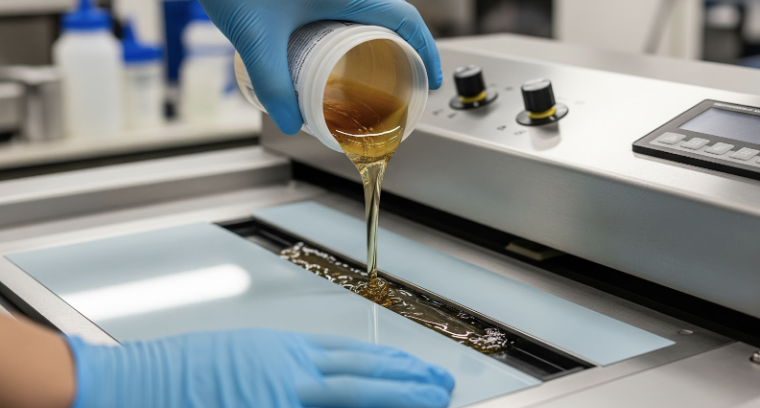
One of the major economic advantages of AVantage® and similar systems is the ability to reclaim and reuse liquid photopolymer resin. With proper handling, reclaimed resin can produce high-quality plates while significantly reducing waste and raw material costs.
To capitalize on the benefits of liquid photopolymer resin reclaim, plants must treat reclaiming as a controlled process with its own specifications and quality checks rather than an informal practice.
Collection and UV protection
Uncured liquid photopolymer resin is sensitive to light, particularly UV. During reclaim:
- Use opaque or UV-blocking collection containers to prevent unintended exposure.
- Ensure that the reclaim area is illuminated with yellow light or light sources fitted with UV filters.
- Avoid leaving open trays or containers of reclaim resin in direct or indirect sunlight.
By protecting reclaimed liquid photopolymer resin from UV, plants prevent partial curing that would introduce gels and hard particles into subsequent plates
Filtration
Filtration is critical to the quality of reclaimed resin. Effective practices include:
- Filtering reclaimed liquid resin to remove gels, hardened pieces, and foreign matter such as dust or fibers.
- Positioning filters either in line on the collection system or at the mouth of the storage container for easy access and maintenance.
- Using appropriately fine filtration, such as 100 to 200 mesh screens, constructed from aluminum or stainless steel, or supported by suitable fabrics like cheesecloth.
- Cleaning filters on a regular schedule, commonly weekly or more often in heavy-use operations.
Overflow resin from processing trays should also be screened and combined with reclaim, provided it meets cleanliness standards.
Mixing reclaimed and virgin resin
To maintain consistent plate performance, reclaimed liquid photopolymer resin should be blended with virgin material at controlled ratios:
- For tank systems, a typical starting guideline is three parts virgin resin to one part reclaimed resin, though specific ratios may be adjusted based on experience and quality targets.
- In batch or bucket systems, reclaimed resin should be aerated and mixed thoroughly with virgin resin before use to ensure uniformity.
- A practical practice is to add reclaimed resin at the end of the production day, followed by equal amounts of virgin resin, and run the system mixer overnight to achieve complete mixing.
Regular additions of both reclaimed and virgin resin help avoid large volumes of old reclaim accumulating, which can complicate quality control.
Safety during reclaim
All safety principles that apply to primary liquid photopolymer resin handling apply equally to reclaim:
- Wear suitable gloves and eye protection when handling resin from reclaim systems to storage tanks.
- Treat reclaim lines, containers, and filters as active chemical systems when performing maintenance or cleaning.
By integrating reclaim into the broader safety program, plants gain financial benefits without compromising worker protection.
Film Negatives and Optical Requirements for AVantage® Resins
High-quality plates depend not only on the liquid photopolymer resin but also on the film negatives used during exposure. For AVantage® systems, negative film quality and specifications are central to accurate reproduction of fine detail.
Key properties for film used in liquid photopolymer plate making include:
- A clear or lightly matte base film that is smooth and free from nicks, scratches, or other handling defects. Heavy matte surfaces can diffuse UV light too much and fill in reverse.
- Appropriate optical density characteristics, with clear areas at very low density to promote exposure where needed and black areas dense enough to fully block UV in non-image regions.
As a guideline, the optical density in the clear areas of the negative should be very low, while black image areas should be high enough (for example, in the range of 4.0 or greater on a transmission densitometer) to prevent undercutting or loss of depth in characters, midtone screens, and shadows.
Film format and handling considerations include:
- Using one-piece negatives wherever possible to avoid overlaps, stripping seams, or taped joints that can create plate tolerance issues or thickness variations.
- Avoid mixing film thicknesses in the same exposure run, because differences in thickness can translate into uneven plate thickness or exposure.
- Selecting the correct reading orientation. Most standard plate production uses right-reading images with the emulsion side up, while some specialty applications, such as bronze plates, may require wrong-reading negatives so that the final product prints correctly.
A high contrast negative and a controlled UV exposure are both necessary to fully leverage the capabilities of AVantage® liquid photopolymer resin. Exposure control guides should be used routinely to monitor plate quality and adjust exposure times as needed.
Managing Washout Chemistry: Feed and Bleed Concepts
Washout baths are an integral part of liquid photopolymer resin processing, and their chemistry must be controlled just as carefully as plate exposure. A common approach is a feed and bleed system that keeps the bath within a target range of concentration and performance.
Core components typically include:
- Water is the primary medium.
- Detergent to help solubilize or emulsify uncured liquid photopolymer resin.
- Defoamer to control foaming and maintain efficient pump and spray performance.
- Developer components and optional performance enhancers.
On each wash cycle, controlled additions of these components are made to maintain the desired bath composition. Operators should rely on documented formulas or technical tips matched to the size and configuration of their washout unit. Where AVenhance is used and also functions as a defoamer, the amount of separate defoamer can often be reduced.
Careful recordkeeping of additions and bath life helps ensure that washout remains effective and consistent, which in turn stabilizes plate quality.
Plate Setup and Thickness Calculation for AVantage® Resins
All photopolymer resins, including AVantage® liquid photopolymer resin, experience some degree of shrinkage during exposure and curing. This shrinkage must be factored into plate setup so that the final plate thickness matches press requirements.
A practical setup method considers:
- Target final plate thickness.
- Resin shrinkage characteristics.
- The thickness of the negative film used.
- The thickness of any cover film or protective layers in the exposure stack.
- The shim pack or backing is used in the exposure unit.
By adding the target plate thickness to allowances for shrinkage, film, and cover films, operators can determine the correct shim pack to achieve the intended plate gauge. Different film types, such as traditional silver film at 4 or 7 mil versus printed film at intermediate thicknesses, will alter the total stack and thus the calculation.
Because printed films often incorporate UV-absorbing coatings to reach high density, exposure times will differ from those required for silver films. Operators should therefore treat any change in film type as a variable requiring recalibration of exposure.
A disciplined approach to plate setup ensures that changes in film or resin batches do not result in gradual drift away from required plate dimensions.
Regulatory Compliance, Waste Management, and SDS Use
Regulatory compliance is a core component of responsible liquid photopolymer resin handling. Plants must manage not only acute safety practices but also waste disposal and documentation in line with local, state, and federal requirements.
Best practices include:
- Reviewing SDS documentation for each AVantage® chemical and liquid photopolymer resin before use and keeping current versions readily accessible to all employees.
- Following SDS guidance for storage, handling, first aid, firefighting measures, and disposal.
- Classifying and disposing of waste liquids, contaminated absorbents, and spent filters according to applicable regulations, which may require managing some materials as regulated waste if they contain certain components.
Whenever possible, reclaiming and reusing liquid photopolymer resin reduces the volume of waste requiring disposal, but any unusable residues and cleanup materials must still be handled responsibly.
Building a Culture of Liquid Photopolymer Resin Safety
Policies and procedures are only effective if supported by a strong safety culture. For liquid photopolymer resin operations, this culture is built through leadership, training, and ongoing engagement.
Key elements include:
- Leadership commitment to safety, demonstrated through investment in PPE, ventilation, training, and incident follow-up.
- Regular, practical training sessions that show workers how to recognize and safely respond to liquid photopolymer resin hazards.
- Open reporting channels for concerns, near misses, or early health symptoms without fear of reprisal.
- Periodic audits and reviews of liquid photopolymer resin practices, followed by visible corrective actions.
When employees see that their health and safety around liquid photopolymer resin is a genuine priority, they are more likely to follow best practices and contribute ideas for improvement.
Partnering with Anderson & Vreeland for Resin Safety and Performance
Anderson & Vreeland supports customers not only with AVantage® liquid photopolymer resin products but also with technical guidance, training, and troubleshooting assistance. A safe, efficient liquid photopolymer resin processing program is easier to achieve when printers draw on the experience of experts who understand both chemistry and flexographic production.
By working with Anderson & Vreeland, operations can:
- Review and refine their liquid photopolymer resin safety procedures.
- Optimize reclaim and reuse systems to maximize material value while maintaining plate quality.
- Improve exposure, washout, and plate setup practices to minimize variability.
- Ensure that SDS information is fully integrated into daily operations.
For more information or to discuss specific safety and process questions around liquid photopolymer resin, contact Anderson & Vreeland. With the right partner and a structured approach, printers can maintain high standards of safety and plate quality while capturing the full economic benefits of advanced liquid photopolymer technologies.
Anderson & Vreeland
Phone: (866) 282-7697
Your Partner in Flexographic Printing Excellence