
Why Water-Washable Plates Deserve Their Own Care Routine
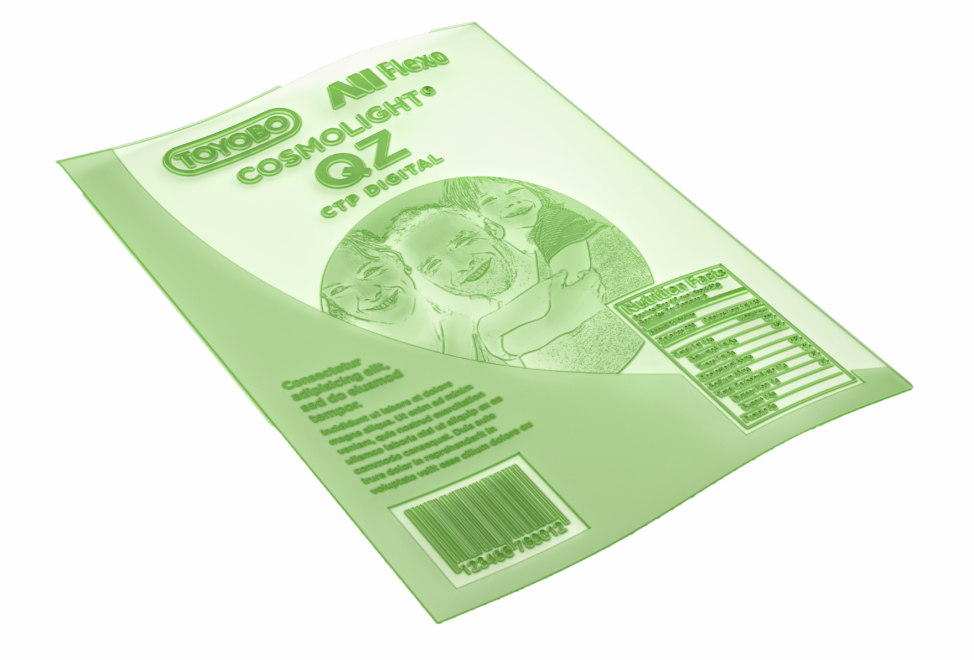
Water-washable flexographic plates like TOYOBO’s Cosmolight series have made plate processing cleaner, faster, and more sustainable by using water instead of solvents. But achieving consistent, high-quality results requires attention to detail at every step, from processing to storage. Whether you use Cosmolight plates for labels or flexible packaging, proper care of photopolymer plates is essential for maintaining print quality and extending plate life.
Here are some key tips for handling and processing Cosmolight plates effectively:
Tips for Handling and Processing Cosmolight Plates
1. Storage of Cosmolight
Unexposed plate
To ensure a longer shelf life, store an unexposed plate in a dark room at a room temperature below 30°C (86°F) and relative humidity between 20% and 65%. Keep a box lying flat.
Exposed plate
- When the plate is kept for future use after printing, remove the inks from the plate surface.
- Insert a cushion between the plates in a case and store it in a dark room.
2. Handling
- It is recommended to handle unexposed plates under the yellow safelight or a UV-free lamp.
- To prevent plates from being damaged while carrying, put a plate on the chipboard, which is enclosed in a box.
- For further information, refer to the Safety Data Sheet (SDS) available from our local distributors.
3. Back-exposure
- Expose UV light from the back side of the plate. The estimated back-exposure time is as follows.*
- Exposure time depends on the lamp kind, its condition, and the image characteristics, and should be re-adjusted for optimum plate quality.
- (Relief depth 0.5-0.8mm, UV-lamp Philips TLK40W/10R)
| Type | Thickness (mm) | NS | NH | NZ | QS | QH | QZ |
|---|---|---|---|---|---|---|---|
| Back-Exposure | 1.14 | 15~20 | 20~30 | 10~15 | 15~20 | 20~30 | 10~15 |
| Time (seconds) | ~20 | ~30 | ~15 | ~20 | ~30 | ||
| 1.7 | 45~60 | 60~75 | 50~65 | 45~60 | 60~75 | 50~65 |
4. Removing a cover film
- Peel off the cover film slowly to the end. Do not stop it halfway.
5. Laser ablation for digital plate, QS, QH, and QZ
- After removing the cover film, mount the plate on a CTP unit and follow the procedure of each unit.
- When demounting the plate from the unit, follow the procedure of the unit.
5. Main exposure
For the analog plate
- Contact the emulsion side of a negative film onto the plate without any dust or air bubbles in between, and then apply vacuum, and expose to UV light.
- At that time, cover the side of a plate with cut cover films (after being peeled) to prevent a vacuum sheet from being stained.
For the digital plate
- They don’t need negative film and vacuuming during main exposure, and don’t put a vacuum sheet on the plate during exposure.
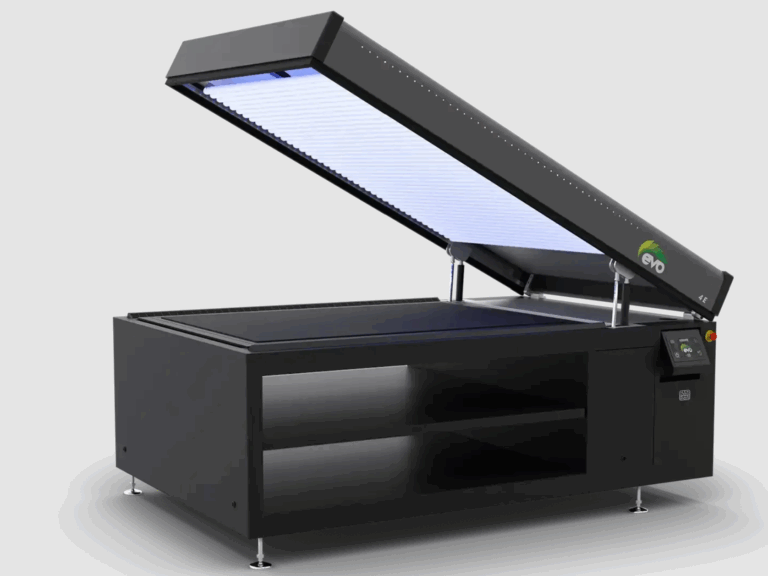
- Set the plate on the exposure unit and expose to UV light.
The estimated Main-exposure time is as follows. *
| Type | NS | NH | NZ | QS | QH | QZ |
|---|---|---|---|---|---|---|
| Main | 2~8 | 3~9 | 2~8 | 2~8 | 3~9 | 2~8 |
| Exposure Time (Minutes) |
- Exposure time depends on a lamp kind, its condition and image characteristics, and should be re-adjusted for optimum plate quality.
- (Relief depth 0.5-0.8mm, UV-lamp Philips TLK40W/10R)
7. Washout
- Use tap water with a small amount of mild detergent. Water temperature should be 40°C(104°F)
- Washout time should be 8-15minutes, depending on the thickness of plate, an image characteristics and washout unit.
- After washout, rinse the plate with diluted water of detergent and wipe off water on a surface with a sponge roll.
8. Drying
- Put a plate in a hot air dryer for 10-20 minutes. Dryer temperature should be 60-70°C(140-158°F)
- For thicker plate, it is recommended to be dried for 20 minutes.
9. Post-exposure
- Expose a plate by UV light for 3-10 minutes to complete a photo-curing.
- Exposure time depends on a lamp kind, its condition and image characteristics.
10. Light-finishing
- Expose a plate by UV-C light for 3-10minutes to eliminate the tackiness of the plate surface.
- Exposure time depends on a lamp kind, its condition and image characteristics.
11. Disposal of wastewater
- Follow in accordance with local/regional/national/international regulation.
Consistency Starts with Plate Care
Water-washable plates like TOYOBO’s Cosmolight simplify processing — but precision still matters.
Maintaining proper processing and environmental conditions ensures your photopolymer plates stay in optimal condition for future use. The result: improved print quality, lower production costs, and cleaner, solvent-free operations.
For more details or recommendations for Cosmolight Flexo Water Wash Plates and processing equipment, contact Anderson & Vreeland’s technical support team.