
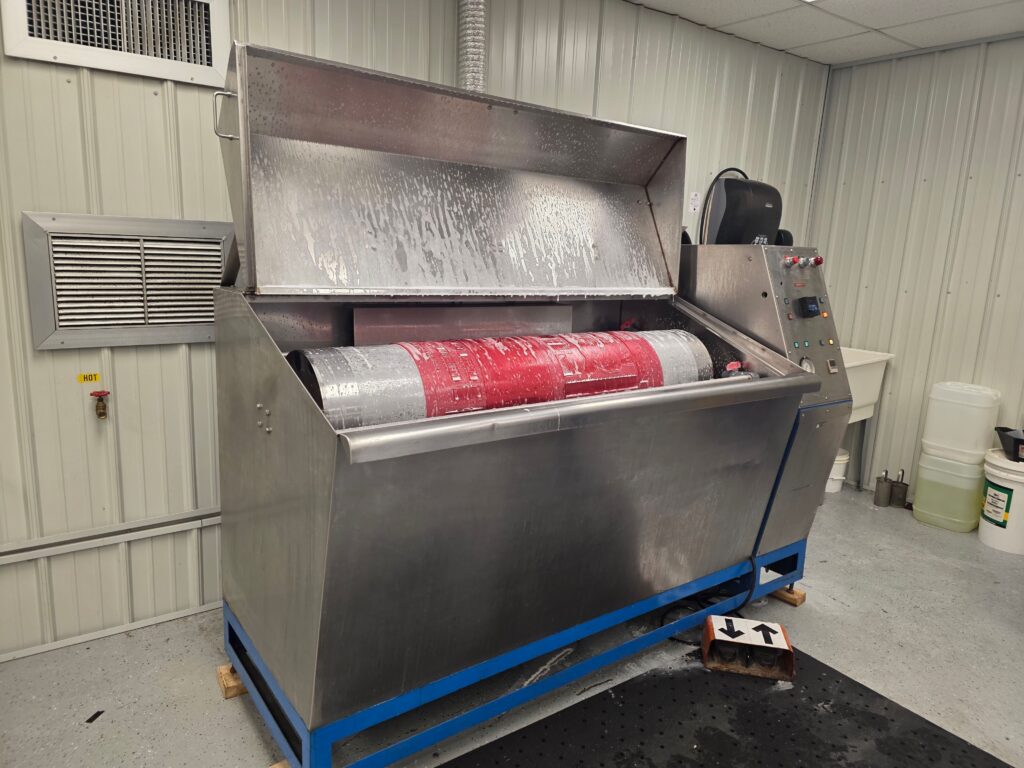
In flexo printing, water-wash plate making has emerged as a game-changer, offering efficiency and environmental benefits. However, to unlock its full potential, printers must adhere to precise guidelines to ensure optimal plate quality and performance.
The Water-wash Platemaking Process
Here’s a comprehensive guide to navigating the intricacies of water-wash plate making:
- Monitoring Plate Thickness
Customers should vigilantly check the caliper or thickness of plates before processing and after washout to maintain consistency and quality.
- Determining Plate Relief
Utilize a back-exposure step-test and micrometer to ascertain the proper plate relief, with the ideal range for digital plates typically falling between 0.018″ to 0.022″ for .045 and .067 plate thicknesses.
- Pre-Installation Inspection
Prior to water-wash equipment installation, inspect crucial facility components such as water hardness, power supply compatibility, equipment dimensions, and water supply adequacy.
- Maintaining Water pH
Ensure the water-wash water maintains a pH above 9.8, with regular checks every four plates, and use approved soaps if pH levels drop.
- Brush Settings
Improper brush settings can lead to shallow floors, brush marks, and inconsistent washout, emphasizing the importance of meticulous calibration.
- Avoiding Over-Washing and Under-Washing
Over-washing risks removing small dots, while under-washing results in polymer residue and irregular dot size, emphasizing the need for precision.
- Proper Drying Temperature
Maintain a drying temperature of 140 degrees Fahrenheit for Cosmolight plates to prevent distortion, ensuring uniform drying across the plate surface.
- Disposing of Waste Water
Follow local regulations and proper procedures for disposing of Cosmolight wastewater, typically involving solidification in a plastic-lined bucket before disposal.
- Maintaining Cosmolight Water Temperature
Maintain the Cosmolight water temperature within the range of 105-110 degrees Fahrenheit for optimal processing results.
By adhering to these water-wash plate making guidelines, printers can optimize plate quality, minimize waste, and streamline their printing processes, ultimately delivering superior results to their clients while reducing environmental impact.
Need more information or personalized assistance? Contact Anderson & Vreeland today and let our experts help you find the perfect solutions for your printing needs!